



What to Do If Your AC Will Not Restart After a Power Flicker
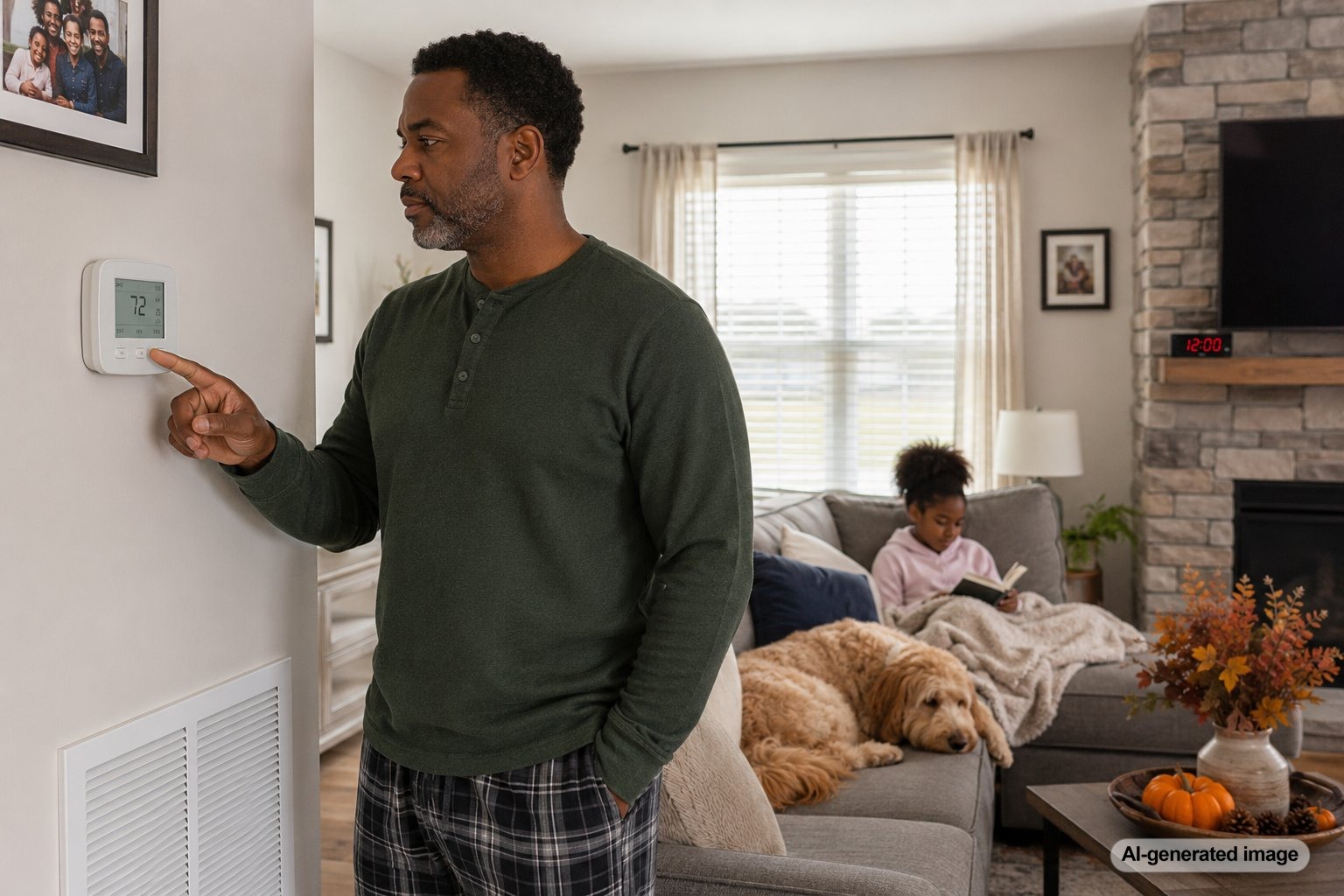
If your AC will not restart after a power flicker, do not assume the system has failed. A brief interruption can trip a breaker, reset the thermostat, activate a built-in compressor delay, or expose an electrical problem that was already developing. The safest approach is to give the system a few minutes, check a small number of homeowner-accessible controls, and avoid repeatedly forcing it to restart.
Power interruptions are common during New Jersey thunderstorms, utility switching, and periods of heavy electrical demand. Most cooling systems are designed with protective controls, but a flicker can still leave the thermostat, indoor equipment, and outdoor unit out of sequence. If the AC remains off after the safe checks below, a qualified technician should evaluate it through professional AC service and maintenance.
Wait at least five minutes before expecting the AC to restart. Confirm the thermostat is powered and set to COOL, check the electrical panel once for a tripped breaker, inspect the air filter, and make sure vents are open. If the breaker trips again, the thermostat stays blank, you smell burning, or the system still will not run, stop troubleshooting and schedule professional service.
Why an AC may stay off after a power flicker
A central air conditioning system is not a single appliance controlled by one switch. The thermostat sends a cooling request, the indoor air handler or furnace moves air, and the outdoor condensing unit removes heat from the home. A short power interruption can affect one part of that sequence without affecting the others in the same way.
For example, the thermostat may restart immediately while the outdoor unit remains in a protective delay. In another situation, the indoor blower may run even though the outdoor compressor has no power. These differences can make the problem look more serious or more confusing than it is.
Start by waiting for the compressor protection delay
Many thermostats and cooling systems delay compressor operation after power is restored. The delay helps prevent the compressor from restarting while refrigerant pressures are still unbalanced. Depending on the equipment and controls, the delay may last several minutes.
Set the thermostat to COOL, choose a temperature below the current room temperature, and wait at least five minutes without changing settings repeatedly. Some thermostats display a message such as waiting, delay, or cool on while the protection period is active.
Repeatedly switching between OFF and COOL can restart the delay timer. Make one adjustment, then give the controls time to respond.
Check whether the thermostat has power
If the thermostat screen is blank, the cooling system may not be receiving a call to run. A blank display can be caused by depleted thermostat batteries, a loss of low-voltage power, a tripped breaker, a condensate safety switch, or another control issue.
If your thermostat uses replaceable batteries, install fresh batteries according to the manufacturer’s directions. Make sure the thermostat is firmly seated on its wall plate and set to COOL rather than HEAT, OFF, or FAN only.
A thermostat that stays blank after fresh batteries may point to a problem elsewhere in the HVAC system. Do not remove equipment panels or handle internal wiring. A technician can test the transformer, control board, safety switches, and low-voltage circuit safely.
Check the HVAC breakers once
Central AC equipment may be connected to more than one breaker. The outdoor unit often has a dedicated double-pole breaker, while the indoor air handler or furnace may use a separate breaker. A power flicker can leave a breaker in a middle position that is not immediately obvious.
- Locate the breaker labeled AC, air conditioner, condenser, furnace, or air handler.
- If a breaker is clearly tripped, move it fully to OFF and then back to ON one time.
- Keep your hands dry and do not touch the panel if there is moisture, heat, buzzing, scorching, or visible damage.
- If the breaker trips again, leave it off and contact a qualified HVAC professional.
A breaker that trips repeatedly is not something to keep resetting. It could indicate an electrical fault, failing motor, damaged compressor, loose connection, or another condition that requires proper testing. Repeated resets may increase the risk of equipment damage or electrical hazards.
Inspect the air filter and vents
A dirty filter usually does not explain why an AC stopped at the exact moment of a power flicker, but it can contribute to overheating, poor airflow, frozen coils, and safety shutdowns. If the filter is visibly loaded with dust, replace it with the correct size and type for the system.
Also confirm that supply registers and return grilles are open and not blocked by furniture, rugs, boxes, or curtains. Restoring airflow will not repair an electrical failure, but it removes a common source of system strain while you determine whether the AC can restart normally.
Look for signs the indoor and outdoor units are out of sequence
After power returns, listen and observe without opening any equipment. The pattern of operation can help a technician understand what happened.
- Nothing runs: The thermostat may lack power, the indoor equipment breaker may be off, or a control or safety device may be open.
- The indoor blower runs but the outdoor unit does not: The condenser may still be in a delay, its breaker may be tripped, or an outdoor electrical component may need evaluation.
- The outdoor unit hums but does not start: Turn the system off at the thermostat and request service. Do not try to push the fan or access electrical components.
- The system starts and stops quickly: Short cycling after an outage may indicate a control, airflow, electrical, or refrigerant-related problem.
- The AC runs but blows warm air: The outdoor unit may not be operating even though the indoor fan is moving air.
These symptoms do not confirm a specific failed part. They simply provide useful clues for professional diagnosis.
Do not use the outdoor disconnect as a reset switch
Most outdoor AC units have an electrical disconnect mounted nearby. That disconnect is intended for service and emergency isolation, not routine homeowner troubleshooting. Avoid opening it, removing a pullout, testing voltage, or touching wiring.
Likewise, do not remove equipment panels, bypass safety switches, replace capacitors, or attempt to test the compressor. AC equipment contains high-voltage components, and some parts can retain an electrical charge after power is turned off.
When a power surge may have damaged the system
A power flicker is a brief loss and restoration of power. A surge is an increase in voltage. The two can occur together, particularly during storms or utility disturbances. Sensitive HVAC components such as control boards, variable-speed motors, thermostats, and communicating controls may be affected by unstable power.
Possible warning signs include a thermostat that no longer communicates with the equipment, a new electrical odor, clicking without startup, unusual error codes, repeated breaker trips, or a system that operated normally before the outage but remains completely unresponsive afterward.
Turn the system off and seek professional help immediately if you notice smoke, sparks, melted wiring, a strong burning smell, loud electrical buzzing, or heat at the electrical panel. Contact emergency services or the electric utility when conditions suggest an active electrical hazard.
When to call an HVAC professional
Schedule service if the AC does not restart after the compressor delay, thermostat check, one safe breaker reset, filter inspection, and vent check. You should also call if only part of the system operates, the breaker trips again, the thermostat remains blank, the outdoor unit hums, or the equipment starts behaving differently after the power event.
A qualified technician can check incoming voltage, disconnects, fuses, contactors, capacitors, motors, compressor operation, thermostat signals, safety circuits, and control boards. That testing is important because several different faults can create the same symptom.
Homeowners throughout Central and Northern New Jersey can request a service appointment when an AC system remains offline after power is restored.
Can you reduce the risk during future outages?
No device can prevent every electrical or HVAC failure, but a few practical steps may reduce risk and make recovery easier. Keep the cooling system maintained, replace filters as needed, address nuisance breaker trips promptly, and avoid ignoring intermittent thermostat or startup problems.
Whole-home surge protection and properly selected HVAC surge protective devices may provide an added layer of protection for sensitive equipment. These products should be evaluated and installed by qualified electrical or HVAC professionals based on the home, electrical service, and equipment requirements.
For longer outages, backup power may also be worth considering. A properly sized and professionally installed home generator can support selected household systems, but generator capacity, startup loads, transfer equipment, and HVAC compatibility must be evaluated before installation.
Frequently asked questions
How long should I wait for my AC to restart after a power flicker?
Wait at least five minutes after power is stable. Some thermostats or systems may require a little longer because of a built-in compressor protection delay. Avoid changing thermostat settings repeatedly while you wait.
Should I reset the AC breaker?
You may reset a clearly tripped breaker one time if the electrical panel is dry, cool, and free of visible damage. If the breaker trips again, leave it off and call a qualified professional.
Why is my thermostat working but the outside AC unit is not?
The outdoor unit may be in a time delay, may have lost power, or may have an electrical or mechanical problem. If it does not start after the delay period, schedule professional service rather than opening the unit.
Can a brief power flicker damage an air conditioner?
A brief flicker does not always cause damage, but unstable voltage or a related surge can affect electrical controls and motors. New symptoms that begin immediately after the event should be evaluated if basic safe checks do not restore operation.
Why does my AC breaker keep tripping after the outage?
Repeated tripping can indicate an electrical fault, motor problem, compressor issue, damaged component, or another condition that requires testing. Do not continue resetting the breaker.
Give the AC time to complete its restart delay, verify the thermostat settings, check the breaker once, and confirm the filter and vents are not restricting airflow. If the system still will not restart or shows electrical warning signs, stop troubleshooting and have the equipment inspected.
Need help with your heating, cooling, or HVAC system?
Meyer & Depew serves homeowners and businesses throughout Central and Northern New Jersey.
Get a quote or call 908.272.2100.