



Why Pet Owners May Need More Frequent Filter Changes
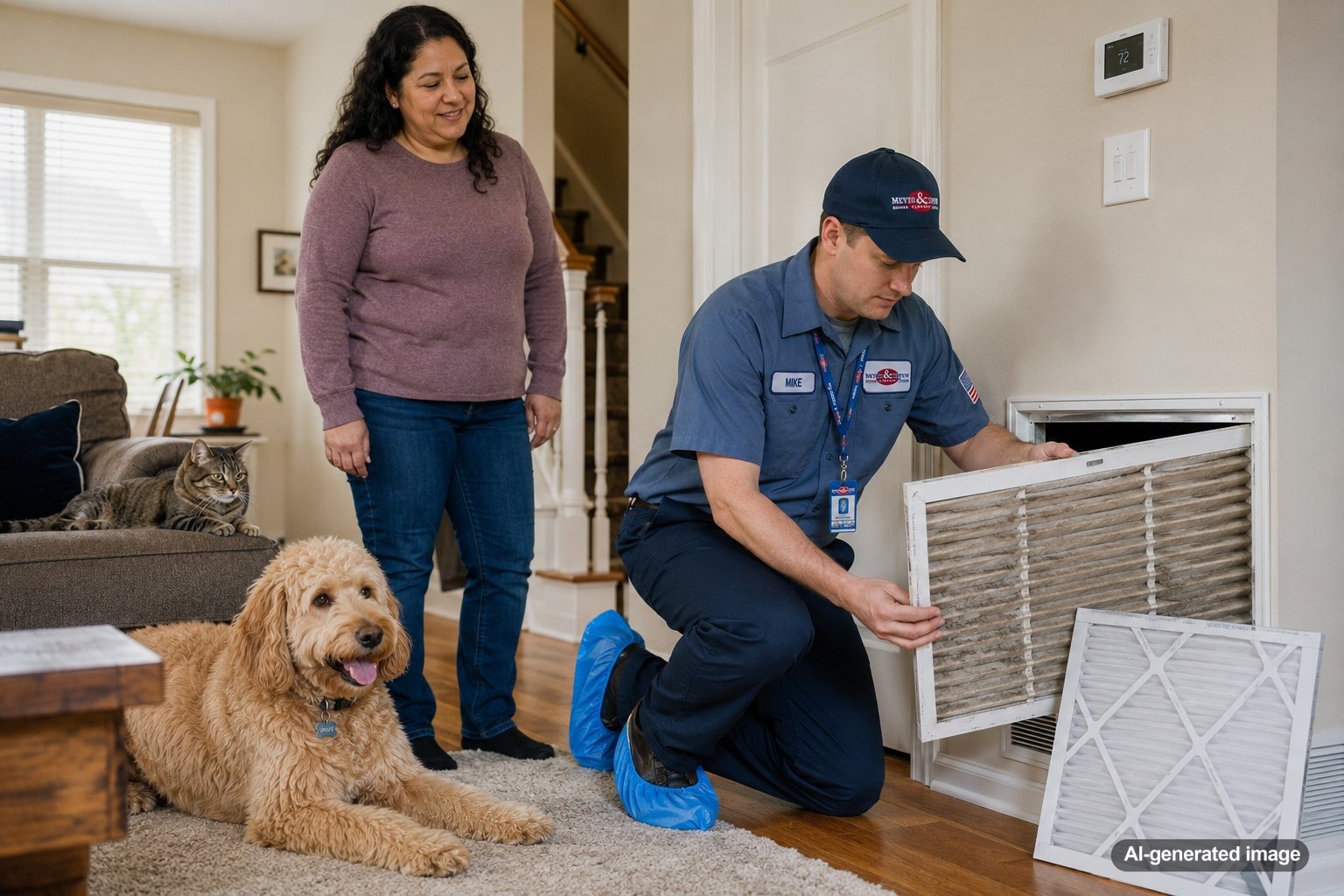
Pet owners often need to inspect and replace their HVAC filters more frequently because dogs, cats, and other animals add hair, dander, dust, and outdoor debris to the air inside a home. As the heating or cooling system circulates that air, the filter collects more material and can become restricted sooner than it would in a home without pets. The right schedule depends on the number of animals, shedding levels, filter type, household activity, and how often the HVAC system runs.
A printed replacement interval is a useful starting point, but it should not replace regular inspection. Checking the filter monthly is a practical habit, especially during a humid New Jersey summer or a cold winter when the system may operate for long periods. Homeowners who want help keeping routine care organized can also review Meyer & Depew’s residential service plans.
- Pet hair and dander can load an HVAC filter faster than ordinary household dust.
- Multiple pets, heavy-shedding breeds, and frequent system use may shorten the useful life of a filter.
- Inspect the filter every month instead of relying only on a fixed calendar interval.
- Replace it when it is visibly dirty, matted, damaged, damp, or noticeably restricting airflow.
- Use only a filter size and efficiency level that are appropriate for the HVAC system.
How Pets Add More Material to the Air
Visible fur is only part of the issue. Pets continually release small skin flakes called dander, and they can carry pollen, soil, plant material, and other outdoor particles inside on their coats and paws. Bedding, litter, grooming, and active play can send additional material into the air.
Much of that material eventually reaches the return-air system. Larger pieces may collect on floors, return grilles, or the surface of the filter. Smaller particles may remain airborne longer before being captured. A home with two large dogs, for example, may place a very different load on its filter than a home with one small, low-shedding pet.
Why a Dirty Filter Matters to the HVAC System
An HVAC filter is intended to collect particles while still allowing enough air to pass through the system. As debris builds up, resistance to airflow increases. The blower may have to work against that restriction, and rooms may receive less conditioned air.
A heavily loaded filter can contribute to weak airflow, longer heating or cooling cycles, uneven temperatures, and reduced comfort. It may also allow dust to collect in other areas if the filter bends, collapses, fits poorly, or permits air to pass around its edges. Filter replacement will not correct every airflow or comfort problem, but it is one of the safest and simplest items a homeowner can check.
How Often Should Pet Owners Check the Filter?
There is no universal replacement interval that fits every pet-friendly home. Filter thickness, filter material, system design, household size, renovation activity, indoor smoking, allergy concerns, and HVAC runtime can all affect how quickly a filter becomes dirty.
A useful approach is to inspect the filter every month and learn how it changes under real household conditions. During the first few inspections, note the date and take a photo of the filter. This creates a simple record that can help establish whether the filter generally lasts a few weeks, a couple of months, or longer.
More frequent replacement may be appropriate when a home has:
- Multiple dogs or cats
- A pet that sheds heavily or seasonally
- Animals that spend substantial time outdoors
- Pet beds located near a return grille
- Residents who are sensitive to airborne allergens
- Ongoing construction, remodeling, or unusually dusty conditions
- An HVAC system that runs for extended periods during hot or cold weather
Signs the Filter May Need to Be Replaced
Look at the filter surface rather than judging it only by age. A filter may need replacement when its material is covered with a dense layer of gray dust, pet hair, or lint. Matted debris, dark discoloration, moisture, odors, tears, or a warped frame are also reasons to install a new filter.
Other clues may include reduced airflow from supply vents, more dust settling around the home, or longer system cycles. These symptoms can have several causes, so replacing a dirty filter is a sensible first step rather than a complete diagnosis. If airflow remains weak after a correct replacement is installed, professional evaluation may be needed.
Choosing a Filter for a Home With Pets
A filter with greater particle-capturing ability may sound automatically better, but filtration and airflow must be balanced. A filter that is too restrictive for the equipment or ductwork can create operating problems. The appropriate choice depends on the system, filter cabinet, blower capacity, and the manufacturer’s requirements.
Confirm the exact filter dimensions before buying replacements. The filter should fit securely without gaps, bending, or forcing. Pay attention to the airflow arrow printed on the frame and install it in the direction of airflow toward the blower.
Homeowners who want to address broader concerns such as dander, odors, pollen, or fine airborne particles may benefit from learning about available air quality and comfort options. A qualified HVAC professional can explain which filtration or air purification choices are compatible with the existing system.
Practical Ways to Reduce Filter Loading
Routine housekeeping cannot eliminate pet-related particles, but it may slow how quickly they accumulate. Vacuum floors, rugs, upholstered furniture, and return grilles regularly. Wash pet bedding according to its care instructions, and groom animals using methods recommended for their coats.
Keep the space around return vents open. Furniture, pet beds, storage boxes, and curtains should not block the return-air path. Avoid placing loose piles of pet hair or grooming debris near a return grille, where they may be pulled directly toward the filter.
- Inspect the HVAC filter and replace it if it is visibly dirty or damaged.
- Confirm that the replacement is the correct size and is installed in the proper direction.
- Make sure supply and return vents are open and not blocked by furniture or pet bedding.
- Look for obvious dust and pet hair on accessible return grilles.
- Schedule professional service if airflow, comfort, or system performance does not improve.
When More Frequent Changes Do Not Solve the Problem
A clean filter may not resolve persistent dust, weak airflow, unusual noises, short cycling, or uneven temperatures. These issues could involve duct restrictions, blower performance, dirty internal components, incorrect filter selection, equipment sizing, or other conditions that require professional testing.
Do not open sealed equipment compartments, modify the filter rack, or install an unusually restrictive filter without guidance. A technician can evaluate static pressure, airflow, filter compatibility, and the overall condition of the heating and cooling system.
Frequently Asked Questions
Should every pet owner replace the filter every month?
Not necessarily. Monthly inspection is more useful than automatically replacing a filter that is still clean and functioning properly. Some pet-friendly homes will need monthly changes, while others may have filters that remain serviceable longer.
Does pet hair stay entirely in the filter?
No. Some hair settles on floors and furniture, while other material collects on return grilles or in accessible areas around the home. Smaller dander particles may remain airborne longer. Regular cleaning and proper filtration work together.
Will a higher-efficiency filter always improve indoor air quality?
Not automatically. A higher-efficiency filter may capture smaller particles, but it must be compatible with the HVAC system and must not create excessive airflow resistance. Professional guidance is helpful when changing filter types or efficiency levels.
Can a dirty filter make the house less comfortable?
It can. A heavily restricted filter may reduce airflow and contribute to longer cycles or uneven temperatures. However, those symptoms can also have other causes, particularly if they continue after the filter is replaced.
Should filters be checked more often during shedding season?
Yes. Seasonal shedding can increase the amount of hair and dander reaching the return-air system. Checking the filter more frequently during those periods can help homeowners adjust their replacement routine based on actual conditions.
Pet ownership does not create one fixed filter schedule. The most dependable approach is to inspect the filter monthly, replace it when debris or damage indicates it is time, and choose a filter that balances particle capture with proper system airflow.
Want to make HVAC maintenance easier to stay on top of?
A service plan can help keep routine heating and cooling maintenance on your calendar before small issues become bigger headaches.
You can also request a service appointment.