

Does Air Duct Cleaning Help With Allergies?
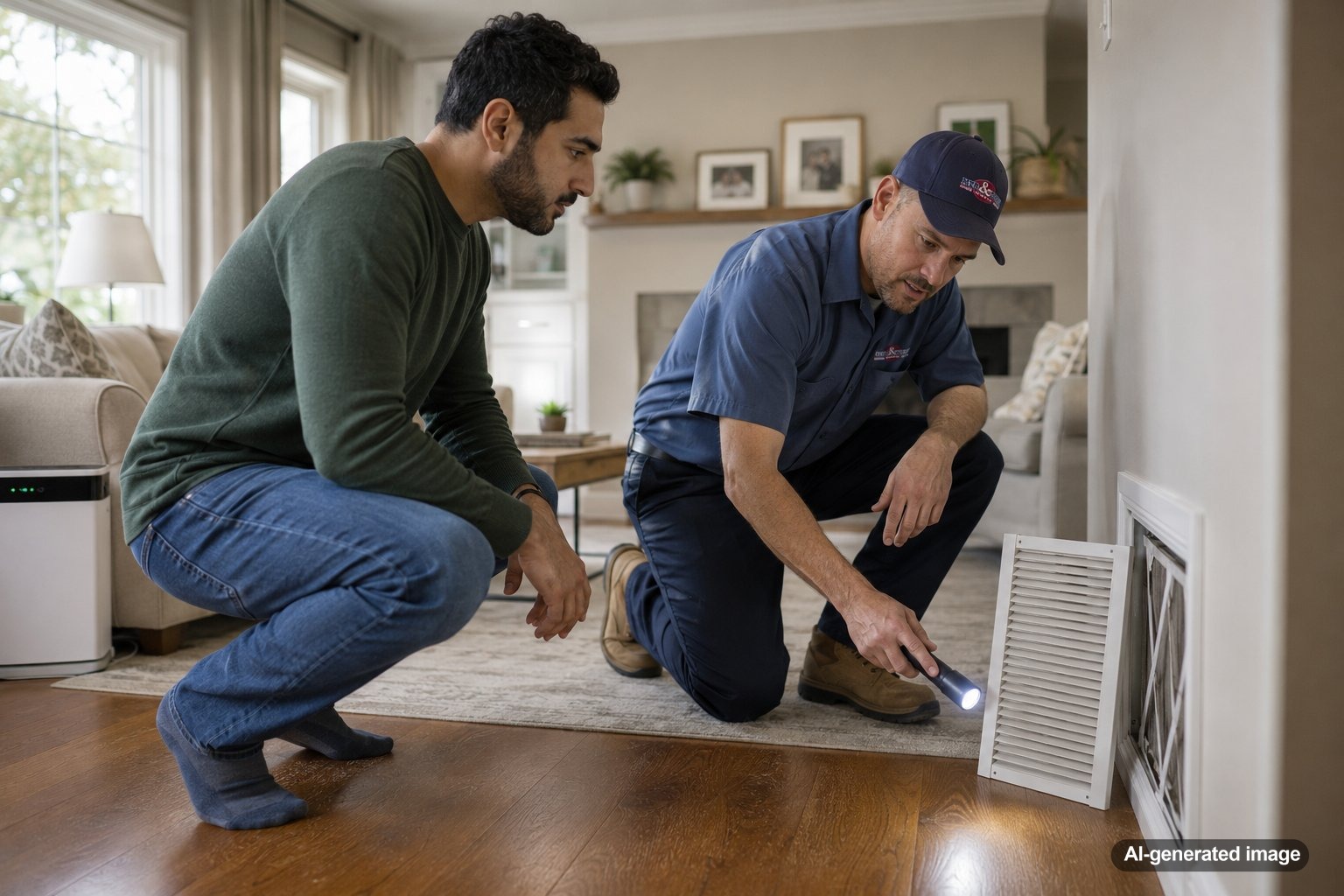
Air duct cleaning may help with allergies in certain situations, but it is not a guaranteed fix for sneezing, itchy eyes, dust, or poor indoor air quality. If your ducts contain heavy dust buildup, visible debris, signs of mold, pest contamination, or construction dust, cleaning the ductwork can remove material that may be circulating through the home. For many New Jersey homeowners, though, allergy comfort depends on the whole HVAC system, not the ducts alone.
The more practical answer is this: duct cleaning can be useful when there is a clear duct-related problem, but better filtration, proper airflow, humidity control, ventilation, and routine air quality and comfort improvements often matter just as much.
Air duct cleaning can help reduce dust and debris inside the duct system, but it does not remove all allergens from a home. Pollen, pet dander, dust mites, mold spores, and other particles can also come from carpets, bedding, furniture, leaks, crawl spaces, attics, and outdoor air. If allergies are a concern, duct cleaning is usually most effective when paired with good filters, professional HVAC maintenance, proper humidity control, and the right indoor air quality strategy.
When air duct cleaning may help with allergies
Duct cleaning is most likely to help when the ductwork itself is part of the problem. That may include visible dust blowing from supply registers, debris inside accessible duct openings, a musty odor that seems connected to the air system, or dust left behind after remodeling work. Homes with pets, older duct systems, recent construction, or long periods without HVAC maintenance may be more likely to have debris in the ductwork.
In those cases, removing material from the ducts may reduce one source of irritation. It is especially worth discussing with a qualified HVAC professional if you see dust collecting quickly after cleaning, notice uneven airflow, or suspect that leaky return ducts are pulling dusty air from an attic, basement, garage, or crawl space.
Why duct cleaning is not a cure-all
Allergies are complicated because the particles that bother people are not limited to ductwork. Pet dander can cling to upholstery. Dust mites live in bedding and fabric. Pollen comes in through doors, windows, clothing, shoes, and pets. Mold concerns may be tied to moisture, drainage, humidity, or ventilation issues rather than the ducts themselves.
That is why a freshly cleaned duct system may not create a noticeable allergy improvement if the main source of the problem is elsewhere. If the air filter is too restrictive, too dirty, or poorly fitted, allergens can continue to move through the system. If indoor humidity is high during a humid New Jersey summer, the home may feel stuffier and more prone to musty odors. If ventilation is poor, stale indoor air can make comfort problems feel worse.
What to look at before scheduling duct cleaning
Before assuming the ducts are the main allergy source, it helps to look at a few practical details. Check whether your HVAC filter is the right size, installed in the correct direction, and changed regularly. Make sure supply and return vents are open and not blocked by furniture, rugs, or storage. Look for obvious dust around registers, but avoid opening sealed equipment or reaching deep into ductwork.
- Inspect or replace the air filter if it is dirty, damaged, or overdue.
- Make sure return vents and supply vents are open and unobstructed.
- Look for visible debris around registers without removing major duct components.
- Note whether symptoms get worse when the HVAC system runs.
- Schedule professional service if dust, odors, moisture, or airflow problems continue.
If you are seeing moisture, mold-like growth, pest activity, or unusual odors, it is better to have the system evaluated rather than relying on duct cleaning alone. The source needs to be understood before the right solution can be recommended.
Other HVAC improvements that may help allergy comfort
For many homes, filtration is the first place to start. A better filter can capture more airborne particles, but it must be compatible with the HVAC system. A filter that is too restrictive may reduce airflow and create comfort or equipment issues. A qualified technician can help determine which filter options make sense for your system.
Air purification can also be useful when airborne particles, odors, or indoor air quality concerns are ongoing. Meyer & Depew offers air purification systems that may help reduce certain contaminants moving through the HVAC system. Ventilation and humidity control can also matter, especially in tightly sealed homes, older homes, finished basements, or homes that feel stale during seasonal weather changes.
When to call a professional
Consider calling a professional if allergy symptoms seem worse when the system runs, dust returns quickly after cleaning, certain rooms feel stale or stuffy, or you notice musty smells near vents. You should also schedule service if airflow is weak, the system short cycles, the filter gets dirty very quickly, or you suspect duct leaks or return-air problems.
A professional HVAC evaluation can look beyond the ducts and consider airflow, filtration, equipment condition, humidity, ventilation, and overall system performance. That broader view is often more helpful than treating duct cleaning as a stand-alone allergy solution.
FAQ: Air duct cleaning and allergies
Will duct cleaning remove pollen from my home?
It may remove pollen or debris that has collected inside the ducts, but pollen can continue entering the home through doors, windows, clothing, pets, and outdoor air. Filtration and regular cleaning habits also matter.
Can dirty air ducts make allergies worse?
They can contribute to irritation if they contain heavy dust, debris, mold concerns, or contaminants that are being moved through the air system. However, allergies can also be driven by sources outside the ductwork.
How often should ducts be cleaned?
There is no one schedule that fits every home. Duct cleaning is usually worth considering after major renovations, visible contamination, pest issues, heavy dust buildup, or when a professional identifies a duct-related concern.
Should I upgrade my filter instead?
In many homes, improving filtration may be a better first step than duct cleaning alone. The filter must match the system’s airflow needs, so it is smart to ask a qualified technician before choosing a higher-efficiency option.
Air duct cleaning can help with allergies when the ductwork contains dust, debris, or contaminants, but it works best as part of a larger indoor air quality plan. For lasting comfort, look at filtration, humidity, ventilation, airflow, and HVAC maintenance together.
Need help with your heating, cooling, or HVAC system?
Meyer & Depew serves homeowners and businesses throughout Central and Northern New Jersey.
Get a quote or call 908.272.2100.