



How Ductless Mini Splits Help With Hot Rooms and Additions
Estimated reading time: 8 minutes
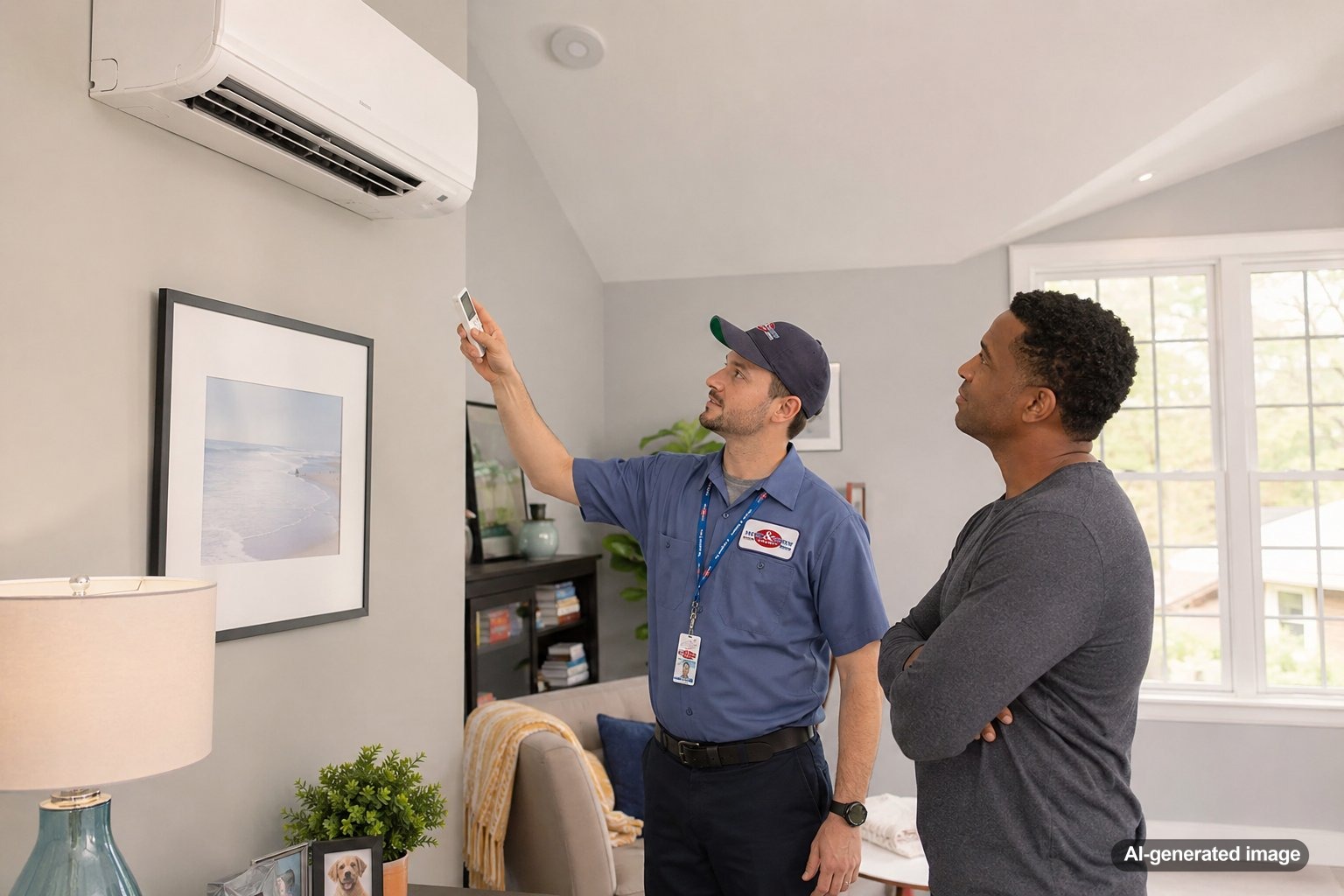
A room that never cools down can make an otherwise comfortable home frustrating to live in. Maybe it is a finished attic, a sunroom, a bonus room over the garage, a home office, or a new addition that was never tied into the main ductwork properly. Ductless mini splits can help by delivering heating and cooling directly to the space that needs it, without relying on the rest of the home’s duct system.
For many homes in Central and Northern New Jersey, a ductless system is a practical way to solve a specific comfort problem without replacing the entire HVAC system. Meyer & Depew helps homeowners evaluate whether ductless mini split systems, zoning, or another comfort solution makes the most sense for the room, the home, and the way the space is used.
Ductless mini splits help hot rooms and additions by cooling the space directly, reducing dependence on long duct runs, and giving homeowners room-by-room temperature control.
- They are useful for additions, finished basements, attics, sunrooms, garages converted to living space, and rooms far from the main HVAC system.
- They can help when existing ducts are undersized, leaky, poorly balanced, or difficult to extend.
- They allow the problem room to have its own thermostat instead of forcing the whole house to match one difficult space.
- They may be a better fit than extending ductwork when construction access is limited or the main system is already near capacity.
Why Some Rooms Stay Hot Even When The AC Is Running
Uneven cooling is common in New Jersey homes, especially in older houses, renovated spaces, and additions built years after the original HVAC system was installed. A central AC system is designed around a certain amount of airflow, duct size, insulation, and room layout. When a space is added, finished, or repurposed, the original system may not be able to serve it well.
A hot room does not always mean the main AC system is failing. It could be caused by long duct runs, poor insulation, large windows, afternoon sun exposure, closed doors, blocked returns, air leaks, or a room located above a garage or under a roofline. In some homes, the ductwork simply cannot deliver enough conditioned air to that room without affecting comfort elsewhere.
This is where a ductless mini split can be helpful. Instead of trying to push more air through ducts that were not designed for the space, a mini split delivers conditioned air directly into the room. That direct approach can make the room easier to control and less dependent on the limitations of the central duct system.
How Ductless Mini Splits Work In Problem Rooms
A ductless mini split uses an outdoor unit connected to one or more indoor units. The indoor unit is installed in the room or area that needs heating and cooling. Because the system does not need traditional ductwork, it can often be installed in places where extending ducts would be invasive, inefficient, or impractical.
In a hot bedroom, for example, the indoor unit can cool that room based on its own thermostat setting. In an addition, the mini split can serve the new space without asking the central AC system to carry a load it was not originally sized to handle. In a finished attic or bonus room, it can provide targeted comfort where duct access may be limited.
This room-by-room approach is different from simply lowering the central thermostat. When you lower the main thermostat to help one hot room, the rest of the house may become too cold while the problem room is still uncomfortable. A ductless mini split lets the difficult room get more direct cooling without overcooling the rest of the home.
Why Additions Are Often Good Candidates For Ductless Cooling
Home additions can be challenging because they change the comfort needs of the house. A new family room, office, primary suite, enclosed porch, or expanded kitchen adds square footage, heat gain, and airflow requirements. If the original HVAC system was not designed for that extra space, extending the ducts may not provide reliable comfort.
Even when ductwork can be extended, the results depend on system capacity, duct design, insulation, and return airflow. A qualified technician can evaluate whether the existing equipment can support the added load. If the main system is already working hard on hot days, adding more ductwork may weaken comfort throughout the house rather than solve the new room’s problem.
Ductless mini splits are often considered for additions because they can serve the added space independently. That can be especially useful when the addition has large windows, a different ceiling height, more sun exposure, or different usage patterns than the rest of the home.
Comfort Benefits Beyond Cooling
The biggest reason homeowners ask about ductless systems is usually comfort, but the benefits can go beyond making one room cooler. Many ductless mini splits provide both cooling and heating, which can help during shoulder seasons when one room needs conditioning but the rest of the house does not.
Ductless systems can also support better temperature control for rooms that are used at different times of day. A home office may need steady comfort during work hours. A guest room may only need conditioning when someone is staying over. A sunroom may need extra cooling in the afternoon but little attention at night. Room-level control can make those spaces more usable without constantly adjusting the central thermostat.
For some homes, ductless can also reduce the strain of trying to force one central system to solve every comfort issue. It is not a cure-all, and it needs to be properly sized and installed, but it can be a strong option when the problem is limited to one or a few specific areas.
Ductless Mini Split Vs. Zoning: Which One Fits The Problem?
Ductless mini splits and zoning systems both address uneven comfort, but they do it differently. A ductless system adds direct heating and cooling to a room or area. A zoning system uses dampers and controls within a ducted HVAC system to manage airflow to different areas of the home.
| Option | Best Fit | Important Consideration |
|---|---|---|
| Ductless mini split | A specific room, addition, attic, basement, sunroom, or hard-to-reach space | Requires proper sizing, placement, and professional installation |
| Zoning system | Larger areas already served by ductwork, such as upstairs and downstairs zones | Depends on duct design, equipment compatibility, and airflow balance |
If your home already has ducts in the problem area, zoning systems may be worth discussing. If the issue is an addition or room without good duct access, ductless may be the more practical path. In some homes, both options deserve consideration.
Safe Checks Before Assuming You Need New Equipment
Before deciding on a ductless mini split, it is worth checking a few simple issues that can make a room feel hotter than it should. These steps are safe for most homeowners and may help identify whether the problem is basic airflow or something that needs professional evaluation.
- Make sure supply and return vents are open and not blocked by furniture, rugs, or curtains.
- Inspect or replace the air filter if it is dirty or overdue.
- Confirm the thermostat settings and fan setting are appropriate.
- Look for obvious gaps around doors, windows, attic hatches, or poorly insulated areas.
- Check whether the room gets heavy afternoon sun or has large windows without shading.
- If it is safe to do so, check whether the breaker has tripped once. If it trips again, schedule professional service.
If these checks do not improve the issue, the room may need a more complete comfort assessment. A qualified technician can look at airflow, duct design, insulation, equipment capacity, and whether a ductless mini split is a good match.
When To Call A Professional
Call a professional when one room stays uncomfortable despite normal thermostat settings, clean filters, and open vents. You should also schedule service if the AC is short cycling, blowing warm air, making unusual noises, leaking water, freezing up, or struggling to keep up across the whole house.
Ductless equipment should be sized and installed by a qualified professional. Oversizing can lead to comfort and humidity problems, while undersizing can leave the room uncomfortable on very hot days. Placement matters too. The indoor unit needs to distribute air effectively, and the outdoor unit needs the right location, clearance, and installation conditions.
For homeowners comparing comfort options, Meyer & Depew can evaluate the room, discuss ductless possibilities, and help determine whether the better answer is a mini split, a zoning upgrade, central AC service, or a broader system improvement through residential AC services.
FAQ About Ductless Mini Splits For Hot Rooms And Additions
Can a ductless mini split cool just one room?
Yes. A single-zone ductless mini split is designed to condition one room or area. It can be a strong option for a bedroom, office, addition, attic, basement, or sunroom that does not cool evenly with the rest of the home.
Will a mini split replace my central AC?
It depends on the home and the goal. In many cases, a ductless mini split supplements the central AC by solving a specific comfort problem. In other situations, multiple ductless units may serve larger areas. A professional evaluation can help determine the right approach.
Are ductless mini splits good for additions?
They often can be. Additions may not have existing ductwork, and the main HVAC system may not have enough capacity for the added square footage. A ductless mini split can condition the addition separately, which may avoid some of the challenges of extending ducts.
Can a ductless mini split help with humidity?
A properly sized ductless system can help manage comfort during cooling operation, but it should not be viewed as a guaranteed fix for every humidity issue. If humidity is a major concern, a technician should evaluate sizing, runtime, ventilation, insulation, and other indoor comfort factors.
Is ductless installation disruptive?
Ductless installation is often less invasive than adding new ductwork, but it still requires professional planning and installation. The exact scope depends on the room, equipment location, electrical needs, and the number of indoor units.
If one room or addition is always hotter than the rest of the house, ductless mini splits can provide targeted comfort without asking your main duct system to do more than it was designed to handle.
Thinking about replacing or upgrading your HVAC system?
Meyer & Depew can help you understand your options for comfort, efficiency, and long-term reliability in your New Jersey home or business.
Questions? Contact Meyer & Depew or call 908.272.2100.