



Why One Room is Hotter Than the Rest of the House
Estimated reading time: 7 minutes
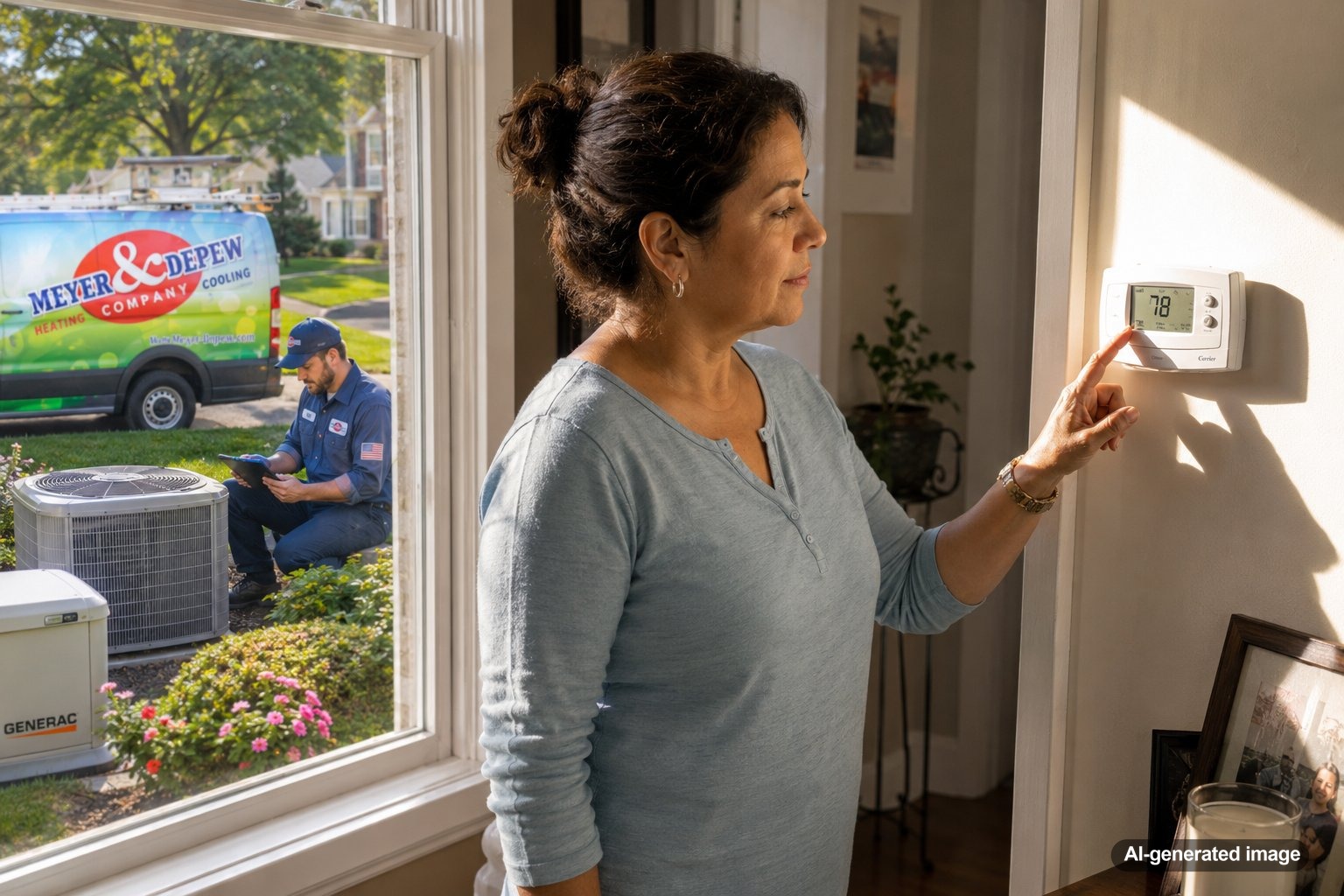
One room that stays hotter than the rest of the house is usually a sign that air is not reaching, staying in, or circulating through that space the way it should. In many Central and Northern New Jersey homes, the cause may be as simple as a blocked vent or dirty air filter, but it can also point to duct leakage, poor insulation, sun exposure, thermostat placement, or an HVAC system that is struggling to keep up.
The important thing is to look at the room as part of the whole comfort system. Your AC does not just cool one space at a time. It depends on proper airflow, balanced ductwork, reasonable heat gain, and a thermostat that accurately represents the home. If one room is always uncomfortable, Meyer & Depew can help evaluate whether the issue is airflow, equipment performance, duct design, or a better room-by-room comfort solution such as zoning systems or ductless cooling.
Quick answer:
One room may be hotter than the rest of the house because of restricted airflow, closed or blocked vents, leaky or poorly sized ducts, inadequate insulation, heavy sun exposure, thermostat location, or an AC system that needs service. Start with safe homeowner checks, then schedule professional HVAC service if the room stays hot, airflow feels weak, or the problem keeps coming back.
Why uneven room temperatures happen
Uneven cooling often starts with airflow. Cooled air has to travel from the air handler or furnace blower through supply ducts, enter each room, mix with the room air, and then return through the home so the system can keep circulating air. When any part of that path is restricted, one room may feel noticeably warmer.
A second-floor bedroom, finished attic, room over a garage, home office with electronics, or space with large windows may also gain heat faster than other rooms. During a New Jersey summer, afternoon sun and humidity can make those rooms feel stubbornly warm even when the thermostat says the rest of the house is comfortable.
Common reasons one room is hotter than the rest of the house
Blocked or closed vents
Furniture, rugs, curtains, storage bins, or closed registers can keep cooled air from entering a room properly. Even a partially blocked supply vent can make a room feel warmer, especially if that room is far from the equipment or already has more sun exposure.
Dirty air filters or restricted system airflow
A clogged filter can reduce airflow throughout the home. Sometimes the room farthest from the blower or the room with the longest duct run feels the difference first. Replacing or inspecting the air filter is one of the safest homeowner checks before calling for service.
Ductwork leaks, gaps, or poor duct balance
If ducts are leaking in an attic, basement, crawl space, or wall cavity, cooled air may never reach the hot room in the right amount. In some homes, the duct serving that room may be undersized, poorly routed, crushed, disconnected, or not balanced correctly. A qualified technician can evaluate duct performance without guesswork.
Return air problems
Rooms need a path for air to return to the HVAC system. If a bedroom door is closed for long periods and there is no proper return path, pressure can build in the room and reduce supply airflow. This can leave the room warmer, stuffier, and slower to cool down.
Insulation and air sealing issues
A hot room may be gaining more heat than the AC can easily remove. Poor attic insulation, gaps around recessed lighting, leaky windows, poorly sealed exterior walls, or a room above an unconditioned garage can all make the space heat up faster than the rest of the house.
Sun exposure and window heat gain
Rooms with west- or south-facing windows often feel hotter in the afternoon and early evening. Window treatments, shade, and insulation can help reduce heat gain, but if the room has a long history of being uncomfortable, the HVAC design may also need attention.
Thermostat location
Your thermostat controls the system based on the temperature where it is installed, not the hottest room in the house. If the thermostat is in a shaded hallway or a naturally cooler first-floor area, the AC may shut off before a warmer bedroom, office, or bonus room has caught up.
Safe checks before you call
Safe checks before you call:
- Confirm the thermostat is set to cooling and the fan setting is appropriate for your comfort goals.
- Inspect or replace the air filter if it is dirty or overdue.
- Make sure supply and return vents are open and not blocked by furniture, rugs, curtains, or clutter.
- Check whether the hot room improves when interior doors are left open for better air circulation.
- Look for obvious debris around the outdoor AC unit, without opening equipment panels.
- If the breaker has tripped, reset it once only if it is safe to do so. If it trips again, call a qualified professional.
These checks can rule out simple causes. They should not involve opening HVAC equipment, handling electrical components, adding refrigerant, adjusting dampers inside sealed ductwork, or trying to repair gas, combustion, or high-voltage parts.
When the problem points to the HVAC system
If the room still runs hot after basic checks, it may be time to schedule professional service. Weak airflow, long cooling cycles, short cycling, unusual noises, ice on refrigerant lines, high humidity, or a sudden change in comfort can all indicate that the AC system needs evaluation. Meyer & Depew’s AC service and maintenance team can inspect system operation, airflow, refrigerant-related symptoms, duct conditions, and other factors that affect comfort.
It is also worth calling for help if the issue has existed for years. Long-term uneven cooling may not be a simple repair problem. It could involve duct design, equipment capacity, home additions, insulation changes, or how the home was originally built. Older homes, expanded homes, and homes with finished third floors or rooms over garages often need a more complete comfort strategy.
Comfort solutions for one stubborn hot room
The right solution depends on the cause. If airflow is restricted because of a maintenance issue, a repair or system tune-up may help. If the room is affected by poor duct balance, duct modifications or balancing may be considered. If the room has unusual heat gain or is difficult to serve with existing ductwork, a ductless mini split system may provide targeted comfort without relying on the main duct system.
Zoning can also be useful in homes where different areas have different comfort needs. A zoning system can help divide the home into separate temperature areas, which may be especially helpful for multi-level homes, additions, bedrooms, and spaces that are used at different times of day. A professional evaluation can help determine whether zoning, ductless equipment, duct improvements, or AC service is the better fit.
Bottom line:
A hot room is not always just a room problem. It may be an airflow, ductwork, insulation, thermostat, or equipment issue. The best next step is to check the simple things first, then have the system professionally evaluated if the comfort problem continues.
FAQ: One room hotter than the rest of the house
Can closing vents in cooler rooms send more air to the hot room?
Closing too many vents can create pressure problems and may reduce system performance. It is better to keep vents open and have a qualified technician evaluate airflow balance if one room is not getting enough air.
Why is one upstairs bedroom always hotter?
Upstairs rooms often gain more heat from the attic, roof, sun exposure, and longer duct runs. Poor insulation, weak airflow, closed doors, and limited return air can make the problem worse.
Does a hot room mean my AC is too small?
Not always. The system may be properly sized, but airflow, ductwork, insulation, or thermostat location may be causing uneven comfort. A technician can evaluate the system before you assume replacement is needed.
Can a smart thermostat fix one hot room?
A smart thermostat may improve scheduling and system control, but it cannot fix blocked ducts, poor insulation, weak airflow, or a room that needs a separate comfort solution. It may be part of the answer, but it is not always the whole answer.
When should I call for HVAC service?
Call for service if airflow is weak, the room stays hot after basic checks, the AC runs constantly, the system short cycles, humidity feels high, or the issue has become worse over time.
Need help with your heating, cooling, or HVAC system?
Meyer & Depew serves homeowners and businesses throughout Central and Northern New Jersey.
Get a quote or call 908.272.2100.