

How Do You Know if Your AC Compressor is Failing?
Estimated reading time: 8 minutes
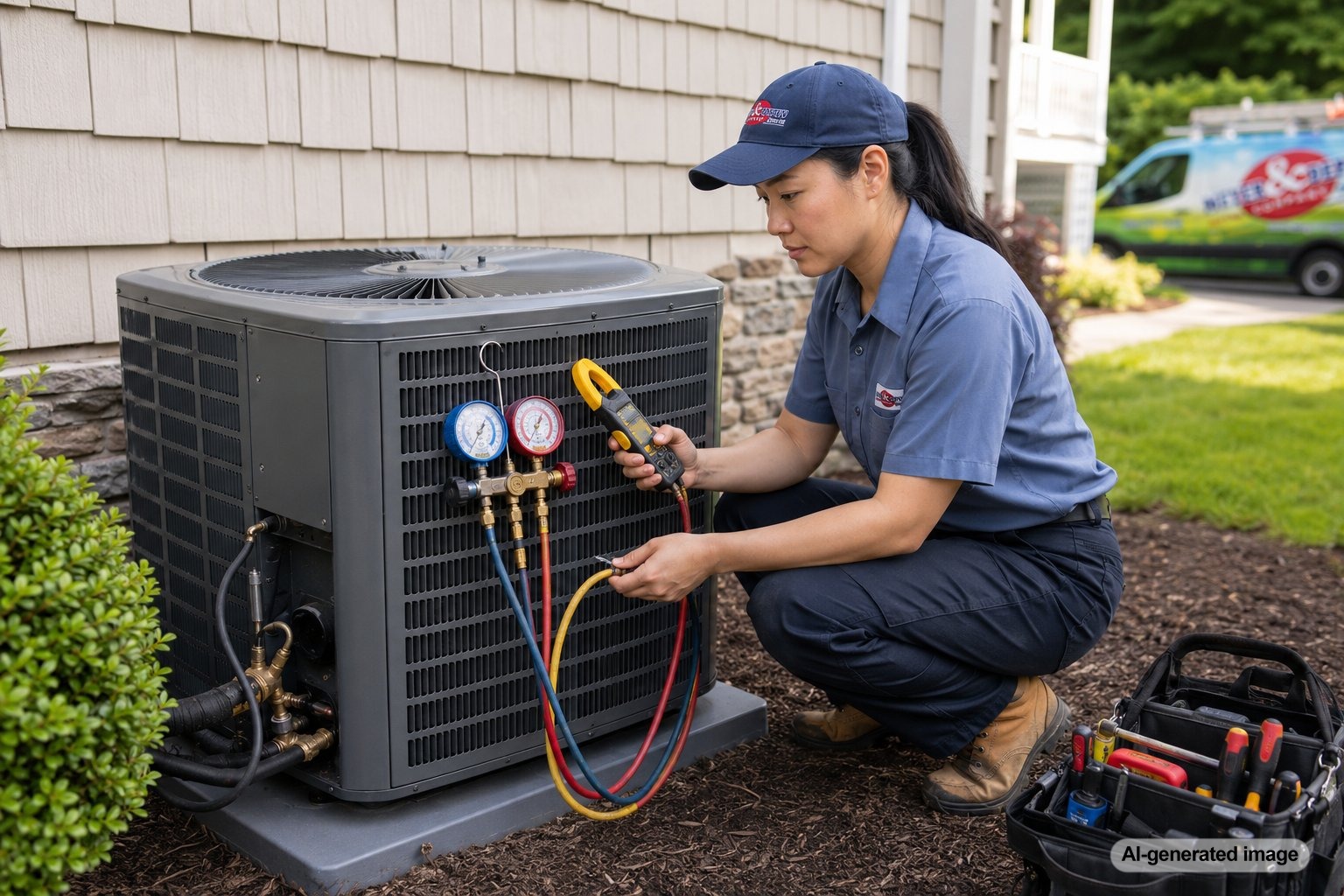
A failing AC compressor often shows up as weak cooling, warm air from the vents, unusual outdoor unit noises, repeated breaker trips, or an air conditioner that starts and stops more than it should. Because the compressor is one of the most important and expensive parts of a cooling system, these symptoms should not be ignored or treated as a simple DIY repair.
For homeowners in Central and Northern New Jersey, compressor trouble can become especially noticeable during humid summer weather, when the AC has to work harder to pull heat and moisture out of the home. If your system is struggling, a qualified technician can evaluate whether the problem is truly the compressor, another electrical or refrigerant-related issue, or an airflow problem that is making the compressor work harder than it should. Meyer & Depew provides AC service and maintenance for homes throughout the region.
Your AC compressor may be failing if the system blows warm air, cools poorly, makes grinding or rattling noises outside, trips the breaker, short cycles, or causes the outdoor unit to run while indoor comfort keeps getting worse. These signs do not prove the compressor has failed, but they do mean the system should be inspected before more damage occurs.
What Does the AC Compressor Do?
The compressor is often described as the heart of an air conditioning system because it moves refrigerant through the cooling cycle. It helps pressurize refrigerant so heat can be absorbed from inside the home and released outdoors. When the compressor is not operating correctly, the entire system can lose its ability to cool effectively.
Compressor problems can be complicated because many symptoms overlap with other AC issues. A dirty coil, low airflow, a failing capacitor, a refrigerant leak, a control problem, or an electrical issue can all make the system behave as if the compressor itself is bad. That is why a careful diagnosis matters. Replacing the wrong part or continuing to run the system under strain can turn a repairable problem into a much bigger one.
Common Signs Your AC Compressor May Be Failing
Warm air or weak cooling
If your thermostat is calling for cooling but the vents are pushing out room-temperature or warm air, the compressor may not be doing its job. This can also happen when refrigerant levels are incorrect, airflow is restricted, or coils are dirty, so the symptom should be treated as a warning sign rather than a final diagnosis.
Outdoor unit noises that sound harsh or unusual
A healthy outdoor unit should make a steady operating sound. Grinding, screeching, buzzing, hard-starting, clanking, or rattling noises can point to a mechanical or electrical problem. If the sound is sudden, loud, or accompanied by a burning smell, shut the system off if it is safe to do so and call for professional service.
The AC starts and stops too often
Short cycling means the AC turns on and off in short bursts instead of completing a normal cooling cycle. This can happen for several reasons, including thermostat issues, airflow restrictions, electrical faults, refrigerant problems, or compressor stress. Short cycling is hard on equipment because the startup phase places extra demand on major components.
The breaker trips repeatedly
A breaker that trips once may be related to a temporary issue, but repeated tripping is a sign to stop resetting it and schedule service. The system may be drawing too much current, and continuing to reset the breaker can create safety risks. Compressor-related electrical issues should always be handled by a qualified professional.
The outdoor unit runs but the house does not cool
Sometimes the outdoor fan may run while the compressor is not properly operating. From inside the home, this may look like the system is working because air is moving, but the temperature never drops. A technician can test components safely and determine whether the compressor, capacitor, contactor, refrigerant circuit, or control wiring is involved.
Why Compressor Problems Can Be Misleading
One of the most overlooked issues with compressor complaints is that the compressor may be reacting to another problem. Restricted airflow from a clogged filter, blocked return, closed vents, or dirty coil can make the system work under poor conditions. Low refrigerant, often related to a leak, can also cause cooling performance to drop and may stress the compressor over time.
Electrical components can create similar confusion. A weak capacitor, faulty contactor, damaged wiring, or control board issue may prevent the compressor from starting correctly even if the compressor has not fully failed. In some cases, homeowners hear humming from the outdoor unit and assume the compressor is gone, when the issue may involve a starting component. In other cases, the compressor really is damaged and the supporting components are only part of the story.
This is why professional testing is important. A technician can check electrical readings, refrigerant conditions, airflow, temperature split, coil condition, and operating behavior. That broader view helps separate a compressor failure from a symptom caused by something else.
Safe Checks Before You Call
Homeowners should not open sealed AC components, handle refrigerant, bypass switches, or attempt electrical repairs. There are still a few safe checks that may help you rule out simple issues before scheduling service.
- Confirm the thermostat is set to cool and the temperature setting is lower than the indoor temperature.
- Inspect the air filter and replace it if it is dirty or heavily restricted.
- Make sure supply vents and return grilles are open and not blocked by furniture, rugs, or storage.
- Look around the outdoor unit for obvious leaves, grass clippings, or debris blocking airflow.
- Check whether the breaker has tripped once, if it is safe to do so. If it trips again, stop resetting it and call a professional.
If these checks do not restore normal cooling, the system needs a closer look. Continuing to run an AC that is struggling, making unusual sounds, or tripping the breaker can increase the risk of additional damage.
Repair or Replace: What Happens If the Compressor Is Bad?
If the compressor is confirmed to be failing, the next question is usually whether repair or replacement makes more sense. The right answer depends on the age of the system, the type of refrigerant it uses, the condition of the indoor and outdoor equipment, past repair history, comfort concerns, and the cost of the compressor work compared with a new system.
For a newer system, replacing a failed compressor may be reasonable depending on warranty status and the overall condition of the equipment. For an older AC, especially one that has needed multiple repairs or no longer keeps the home comfortable during humid New Jersey weather, replacement may be the more practical long-term conversation. Meyer & Depew can also help homeowners review AC installation and replacement options when repair no longer feels like the best investment.
There is no one-size-fits-all answer. A trustworthy recommendation should explain what failed, what else was tested, what repair would involve, and how the condition of the rest of the system affects the decision.
How Maintenance Can Reduce Compressor Stress
Routine maintenance cannot prevent every breakdown, but it can reduce some of the conditions that place extra strain on a compressor. Clean coils, proper airflow, secure electrical connections, and a system that is checked before peak cooling season may help catch small problems before they become more disruptive.
This is especially useful in New Jersey homes where spring pollen, summer humidity, older ductwork, finished basements, additions, or uneven rooms can all affect comfort. A maintenance visit can also help identify airflow restrictions, worn components, or operating conditions that make the AC work harder than necessary. For homeowners who prefer to keep routine service on a schedule, service plans can make ongoing maintenance easier to manage.
When to Call a Professional
Call for AC service if your system is blowing warm air, cooling poorly, making loud outdoor-unit noises, short cycling, leaking around equipment, or repeatedly tripping the breaker. You should also schedule service if the outdoor unit seems to run but the indoor temperature does not improve, especially during hot and humid weather.
Seek help right away if you notice smoke, sparks, a burning electrical smell, or unsafe conditions near the equipment. Turn the system off if it is safe to do so and avoid trying to open or repair electrical and refrigerant components yourself.
FAQ About AC Compressor Problems
Can an AC compressor be repaired?
Sometimes compressor-related problems can be corrected by repairing another component, such as a capacitor or contactor. If the compressor itself has failed internally, replacement of the compressor or the AC system may be discussed depending on the system’s age and condition.
How long can I run my AC if the compressor is failing?
It is best not to keep running an AC that shows serious compressor warning signs. Continued operation can create more stress on the system and may increase repair costs. If the system is making unusual noises, tripping the breaker, or not cooling, shut it off and schedule service.
Does warm air always mean the compressor is bad?
No. Warm air can be caused by thermostat settings, dirty filters, blocked airflow, refrigerant issues, coil problems, electrical faults, or compressor trouble. A technician can test the system to identify the actual cause.
Is compressor replacement worth it on an older AC?
It depends on the equipment age, repair history, refrigerant type, warranty status, comfort performance, and total repair cost. On older systems, a replacement discussion may make more sense than investing heavily in one major component.
If your AC is not cooling properly and the outdoor unit sounds unusual, short cycles, or trips the breaker, the compressor may be part of the problem. Do the safe basic checks, then have the system inspected before the issue gets worse.
Need help with your heating, cooling, or HVAC system?
Meyer & Depew serves homeowners and businesses throughout Central and Northern New Jersey.
Get a quote or call 908.272.2100.