



Why Two-Story Homes Often Need Better Cooling Control
Estimated reading time: 7 minutes
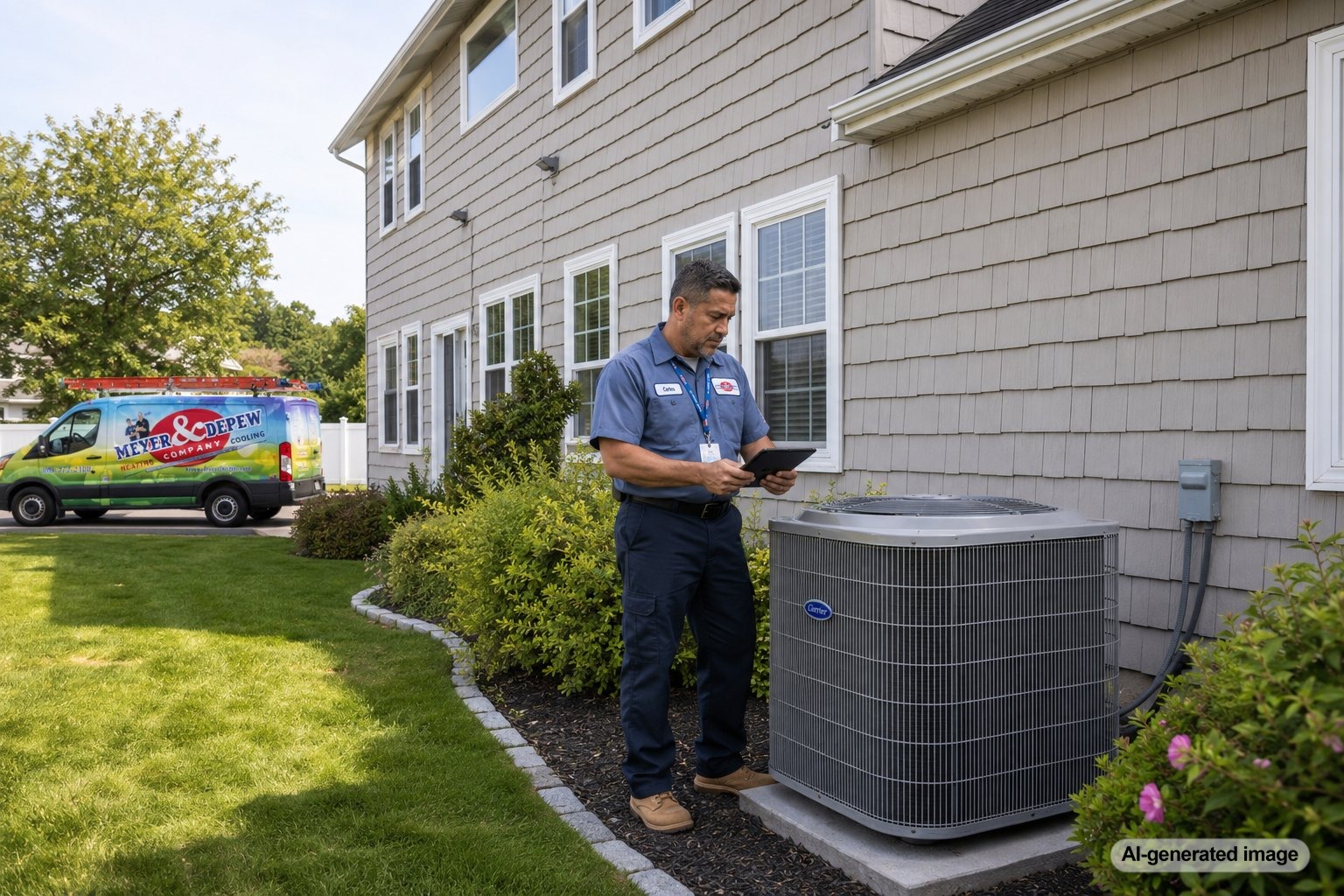
Two-story homes often need better cooling control because heat naturally rises, upstairs rooms gain more sun exposure, and a single thermostat may not reflect what is happening throughout the house. In many New Jersey homes, the first floor can feel comfortable while bedrooms, offices, or finished attic spaces stay several degrees warmer. That does not always mean the AC system is broken, but it does mean the home may need a smarter way to manage airflow, temperature, and cooling demand.
For homeowners in Central and Northern New Jersey, this issue can become especially noticeable during humid summer weather, when the AC has to manage both temperature and moisture. Better control may involve airflow improvements, thermostat adjustments, maintenance, zoning systems, ductless options, or a closer look at whether the existing cooling system is matched to the home.
Two-story homes often cool unevenly because the upstairs level usually has a higher cooling load than the downstairs level. Heat rises, roof exposure adds extra heat, ductwork may not deliver air evenly, and one centrally located thermostat can shut the AC off before upstairs rooms are comfortable.
- Upstairs rooms often gain more heat from the roof, attic, and direct sun.
- A single thermostat may only measure the temperature in one part of the home.
- Restricted airflow, leaky ducts, or poor return air can make the second floor harder to cool.
- Better control can come from zoning, smart thermostats, ductless systems, maintenance, or system upgrades.
Why upstairs rooms often feel warmer
The second floor of a home usually carries a larger cooling burden than the first floor. Warm air moves upward, but that is only part of the story. Upstairs rooms are also closer to the attic and roof, which can hold heat long after the sun goes down. Bedrooms with large windows, west-facing exposure, or poor attic insulation may stay warmer even when the AC is running.
Humidity can make the difference feel even bigger. On sticky New Jersey summer days, a room may technically be near the thermostat setting but still feel uncomfortable because the air is damp and slow-moving. Cooling control is not just about pushing colder air into the house. It is about balancing temperature, airflow, run time, and humidity in the rooms people actually use.
The problem with one thermostat for two levels
Many two-story homes rely on one thermostat, often located on the first floor or in a hallway. That thermostat controls the entire cooling system based on the temperature where it is installed. If the downstairs hallway reaches the set temperature, the system may shut off even though upstairs bedrooms still need more cooling.
This is one reason homeowners sometimes lower the thermostat more than usual at night. The downstairs area may become too cold while the upstairs still feels warm. Over time, that can create comfort complaints, longer run times, and unnecessary wear on the system without actually solving the room-by-room imbalance.
Airflow and ductwork make a major difference
Uneven cooling is often tied to airflow. If the upstairs supply ducts are undersized, leaking, poorly balanced, or restricted, the second floor may not receive enough conditioned air. Return airflow matters too. Without enough return air from the upstairs level, the system may struggle to pull warm air back to be cooled.
Some homeowners try to solve this by closing vents downstairs. That may seem logical, but it can create pressure problems inside the duct system and may reduce performance. A qualified technician can evaluate whether the system needs balancing, duct improvements, return-air changes, or other adjustments designed for the home’s layout.
Control options that may help a two-story home
There is no single fix for every two-story home. The right approach depends on the age of the home, duct layout, insulation, window exposure, equipment condition, and how the family uses each floor. In some homes, basic maintenance and airflow correction are enough. In others, better room-by-room control is the more practical path.
- Thermostat strategy: A better thermostat location, smart thermostat features, or remote sensors may help the system respond more accurately to occupied rooms.
- Zoning: A zoning system can divide the home into separate comfort areas, allowing different levels to receive cooling based on need.
- Ductless mini splits: A ductless system may help with a hard-to-cool bedroom, addition, finished attic, or bonus room without relying only on existing ductwork.
- AC maintenance: Dirty filters, low airflow, clogged coils, and worn components can make an already uneven home feel worse.
- System replacement: If the AC is aging, oversized, undersized, or poorly matched to the home, replacement may be worth discussing.
For many homeowners, the best first step is a professional look at the existing cooling system and ductwork. Meyer & Depew’s AC service and maintenance team can evaluate performance issues and help identify whether the concern is maintenance-related, airflow-related, or a sign that better control is needed.
Safe checks homeowners can make first
- Make sure the air filter is clean and properly installed.
- Confirm that upstairs supply and return vents are open and not blocked by furniture, rugs, or curtains.
- Check thermostat settings, fan settings, and schedules to make sure they match how the home is used.
- Look for obvious debris around the outdoor AC unit, keeping the area clear without opening the equipment.
- If a breaker has tripped, reset it once only if it is safe to do so. If it trips again, schedule professional service.
These simple checks can remove some common restrictions, but they should not replace professional service if the home still cools unevenly. Homeowners should not open sealed HVAC equipment, modify electrical components, add refrigerant, bypass safety controls, or attempt duct changes that could affect system pressure and performance.
When better cooling control is worth considering
Better cooling control may be worth discussing if upstairs bedrooms are consistently uncomfortable, the thermostat has to be set much lower than desired, the first floor becomes too cold, or certain rooms never seem to match the rest of the house. It is also worth looking into if the AC runs for long periods without improving comfort, short cycles frequently, or struggles most during humid weather.
Homes with finished attics, large primary suites, sunrooms, additions, or converted spaces often have special cooling needs. These areas may not have been part of the original system design, or they may have heat gain that standard ductwork does not handle well. In those cases, ductless mini split systems or zoning may provide more targeted comfort than simply lowering the main thermostat.
FAQ about cooling control in two-story homes
Why is my upstairs so hot even when the AC is on?
Upstairs rooms may stay warm because of heat rising, attic heat, sun exposure, limited airflow, duct leakage, poor return air, or a thermostat that is mainly responding to the first floor. A technician can evaluate which factors are affecting your home.
Will a bigger AC fix uneven cooling?
Not always. An oversized AC can short cycle, which may reduce humidity control and still leave certain rooms uncomfortable. Proper sizing, airflow, duct design, and control strategy all matter.
Can smart thermostats help with upstairs comfort?
Smart thermostats and remote sensors may help by giving the system better information about occupied rooms. They are most effective when the underlying airflow and equipment performance are in good condition.
Is zoning a good option for a two-story home?
Zoning can be a good option when the first and second floors have different cooling needs. It should be designed and installed properly so airflow, duct pressure, and equipment operation remain within safe and effective limits.
When should I call an HVAC professional?
Call a professional if uneven cooling continues after basic checks, if the AC runs constantly, if airflow is weak, if breakers trip, or if you notice unusual noises, burning smells, leaks, or other signs that the system may need service.
Two-story homes often need better cooling control because one thermostat and one airflow pattern may not match the way heat moves through the house. The right solution may be simple maintenance, improved airflow, zoning, ductless cooling, or a system upgrade, but it should start with a clear evaluation of how the home is actually cooling.
Need help with your heating, cooling, or HVAC system?
Meyer & Depew serves homeowners and businesses throughout Central and Northern New Jersey.
Get a quote or call 908.272.2100.