


How to Set Your AC Before Guests Arrive
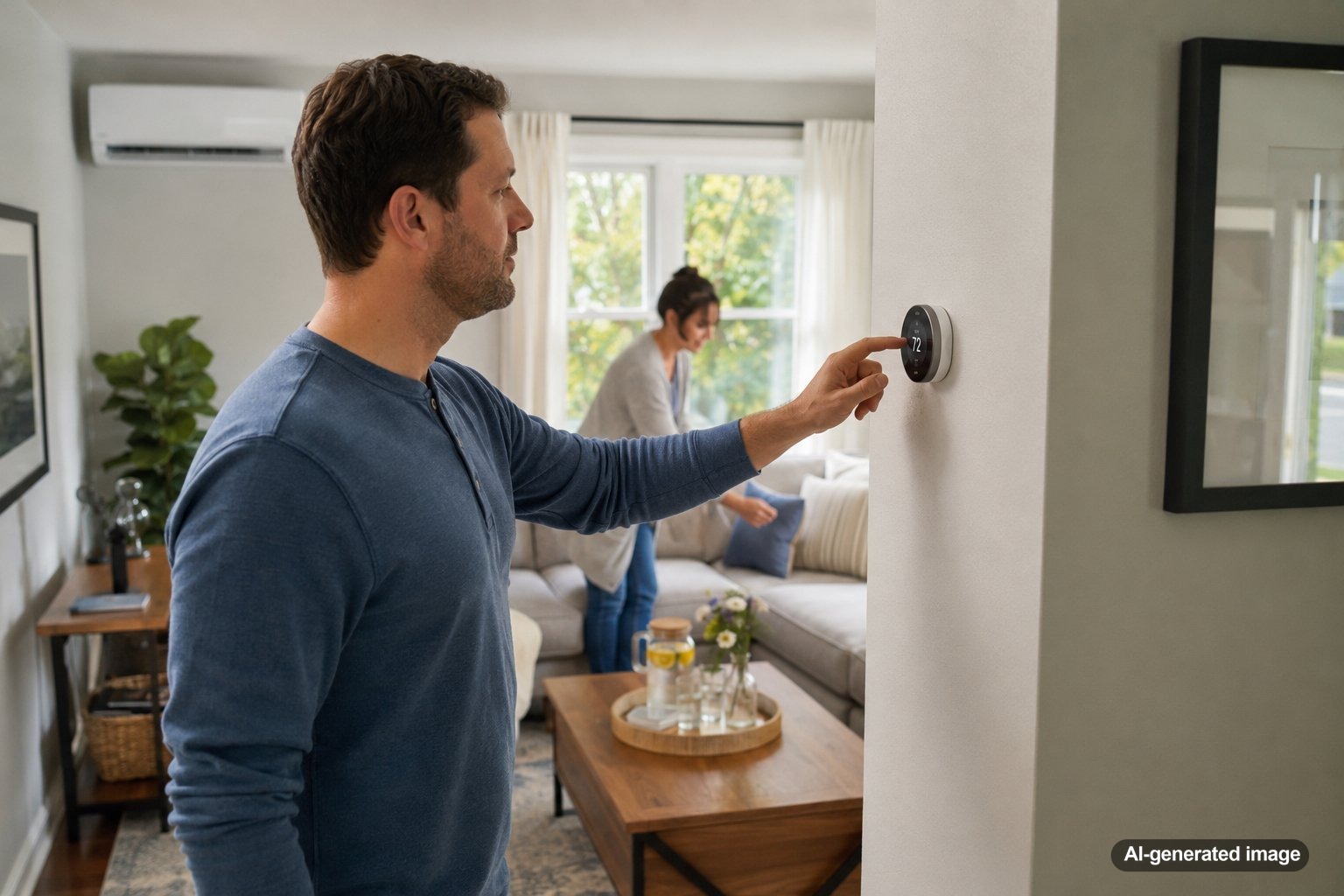
When guests are on the way, the right AC setting can make the difference between a comfortable gathering and a house that feels warm, sticky, or uneven. Set the thermostat too late, and the system may struggle to catch up. Set it too low, and you could end up with short cycling, cold rooms, and unnecessary strain on the equipment.
For most New Jersey homes, the best approach is to pre-cool gradually, account for extra body heat, and avoid dramatic thermostat changes once people arrive. If your system has been having trouble keeping up, Meyer & Depew’s AC service and maintenance team can evaluate airflow, equipment performance, thermostat operation, and comfort issues before your next gathering.
Set your AC 2 to 3 degrees cooler than your normal occupied setting about one to two hours before guests arrive. Keep interior doors open where possible, close blinds on sunny sides of the home, replace a dirty filter if needed, and avoid dropping the thermostat by 8 or 10 degrees at the last minute.
Start Cooling Before The Room Fills Up
People, cooking, sunlight, open doors, electronics, and activity all add heat to your home. A living room that feels fine at 3 p.m. can feel much warmer once guests gather, the oven is on, and people are moving between the kitchen, patio, and dining area.
Instead of waiting until everyone arrives, lower the thermostat slightly ahead of time. A modest adjustment gives your AC a chance to remove heat and humidity steadily. This is especially helpful during humid New Jersey summer weather, when comfort depends on moisture control as much as temperature.
A good rule of thumb is to set the thermostat 2 to 3 degrees below your normal setting about one to two hours before guests arrive. For example, if you usually keep the house at 74, setting it to 71 or 72 before the gathering may help the space feel more comfortable once the home gets busier.
Do Not Slam The Thermostat Way Down
Lowering the thermostat to 60 will not make most central AC systems cool faster. The system will usually run at the same capacity until it reaches the set temperature. What changes is how long it runs, how cold some rooms may become, and how much strain you may place on equipment that is already working hard.
Big temperature swings can also create comfort complaints. One room may feel chilly while a crowded kitchen still feels warm. Upstairs bedrooms may stay stuffy while the first floor gets too cool. A smaller adjustment made earlier is usually more effective than a dramatic change made after guests are already uncomfortable.
Account For Humidity, Not Just Temperature
In Central and Northern New Jersey, humidity often makes a home feel warmer than the thermostat number suggests. Your AC helps remove moisture as it cools, but it needs proper run time and airflow to do that well.
If the house feels clammy, avoid constantly changing the thermostat up and down. Let the system run steadily, keep windows and exterior doors closed as much as practical, and limit unnecessary door traffic. If your thermostat has a humidity reading, use it as a clue. High indoor humidity may point to airflow issues, oversized equipment, poor ventilation, or a system that needs professional attention.
Use Fans The Right Way
Ceiling fans and portable fans can help guests feel cooler by moving air across the skin. They do not lower the actual room temperature, but they can make occupied areas feel more comfortable while your AC handles cooling and dehumidification.
For a gathering, use fans in rooms where people will sit, eat, or mingle. Turn them off in empty rooms to avoid wasting electricity. Make sure ceiling fans are rotating in the cooling direction and are not blowing directly across food, papers, candles, or lightweight decorations.
Prepare The House Before Guests Arrive
A few simple steps can help your AC do its job more effectively before the doorbell starts ringing. These are safe homeowner checks, not equipment repairs.
- Check the thermostat mode and confirm it is set to cooling, not fan-only or heat.
- Replace or inspect the air filter if it looks dirty or overdue.
- Make sure supply and return vents are open and not blocked by furniture, rugs, or party setup.
- Close blinds or curtains on sunny windows, especially in west-facing rooms later in the day.
- Keep the outdoor unit clear of obvious leaves, grass clippings, or debris around the cabinet.
- Use kitchen exhaust fans briefly while cooking, but avoid running large exhaust fans longer than necessary.
If your home has a smart thermostat, you can also schedule the pre-cooling period instead of remembering to change it manually. Meyer & Depew also works with thermostats and comfort controls that can make temperature management easier during busy seasons.
Think About Where Guests Will Gather
Your thermostat may be in a hallway, but your guests may spend most of their time in the kitchen, family room, finished basement, or sunroom. That matters. A thermostat can only read the temperature where it is located, so the most crowded rooms may feel different from the number on the display.
If one room always gets warm during parties, look at the basics first. Are vents blocked by furniture? Is the room full of west-facing glass? Is the kitchen adding heat from cooking? Is the room far from the air handler? These clues can help you decide whether the issue is normal party heat or a larger comfort problem.
For recurring uneven comfort, options such as zoning, ductless cooling, thermostat upgrades, or airflow improvements may be worth discussing. The right answer depends on the home layout, equipment, duct design, insulation, and how you use the space.
What If The AC Still Cannot Keep Up?
If you pre-cool the home, keep doors closed, replace a dirty filter, and still cannot get comfortable, the system may need service. Weak airflow, refrigerant problems, dirty coils, thermostat issues, aging equipment, duct leakage, or undersized cooling capacity can all contribute to poor performance.
Do not open sealed AC equipment, attempt refrigerant work, bypass safety switches, or modify electrical components. If you notice burning smells, smoke, sparks, water around electrical equipment, or another unsafe condition, prioritize safety and contact the appropriate professional help.
For non-emergency comfort issues, schedule service before your next event. A qualified technician can evaluate whether the system is operating properly and whether maintenance, repair, or an upgrade should be considered.
FAQ
How long before guests arrive should I lower the AC?
In many homes, one to two hours is a reasonable starting point. Larger homes, older homes, sunny rooms, and humid days may need more time. The goal is steady pre-cooling, not a last-minute temperature drop.
What temperature should I set my AC to for a party?
Try setting it 2 to 3 degrees lower than your usual occupied setting before guests arrive. The best number depends on your home, humidity, number of guests, cooking plans, sun exposure, and how well your AC is performing.
Should I leave the AC fan set to on?
Fan settings depend on the system and comfort goal. Leaving the fan on can help circulate air, but in some homes it may affect humidity comfort. If humidity is a concern, ask a qualified HVAC professional what fan setting is best for your equipment and thermostat.
Why does my house get hot whenever we host people?
Guests add body heat, doors open more often, cooking adds heat, and crowded rooms can warm faster than the thermostat area. If the temperature rises dramatically or the AC never catches up, it may also point to airflow, maintenance, duct, or equipment issues.
Can a service plan help prevent party-day AC problems?
Routine maintenance may help catch certain issues before they become bigger comfort problems, but it cannot prevent every breakdown. A service plan can make it easier to stay on top of seasonal HVAC maintenance.
Need help with your heating, cooling, or HVAC system?
Meyer & Depew serves homeowners and businesses throughout Central and Northern New Jersey.
Get a quote or call 908.272.2100.