



Why Open Floor Plans Can Be Hard to Cool Evenly
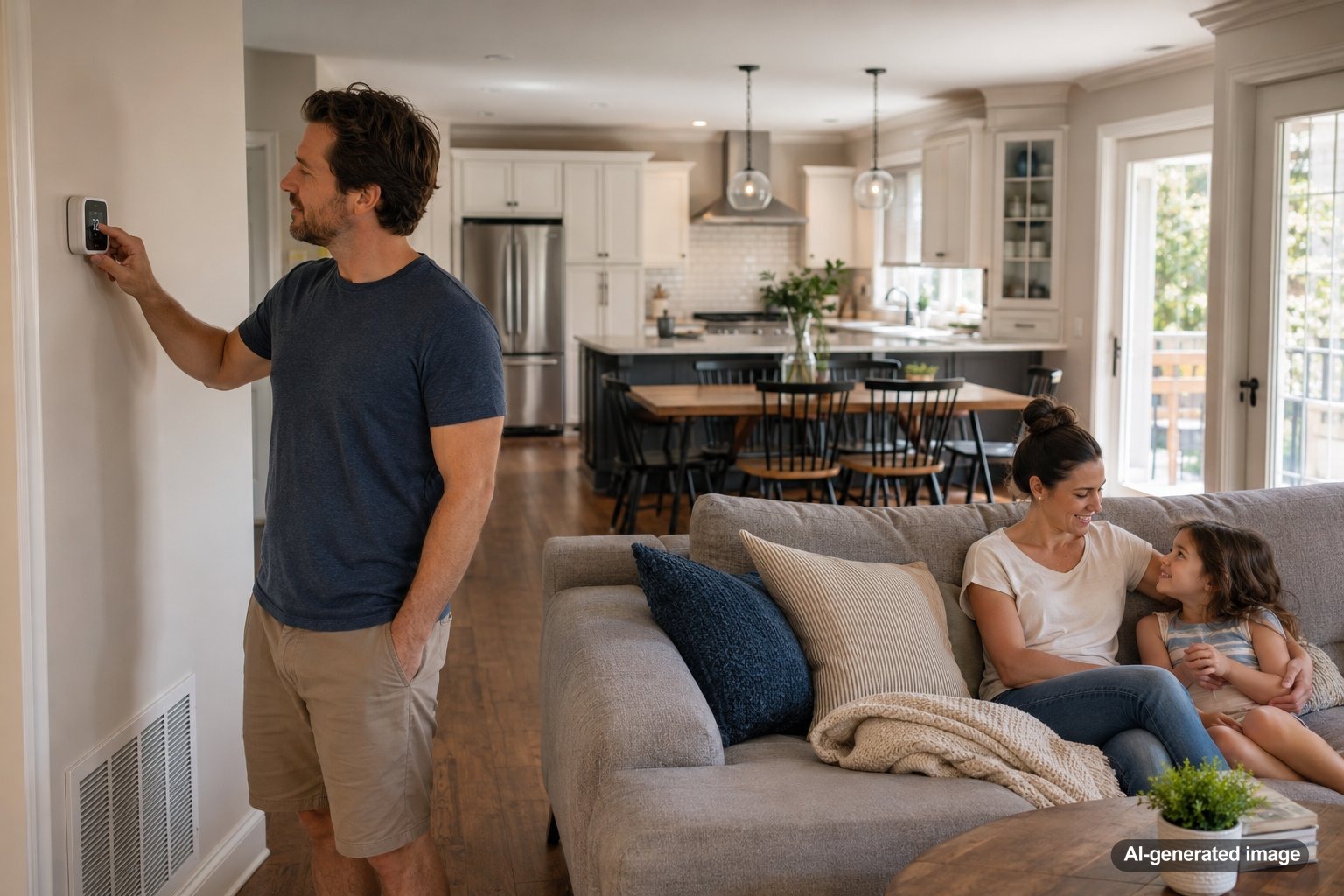
Open floor plans feel bright, spacious, and easy to live in, but they can be surprisingly difficult to cool evenly. One large connected space may look simple on paper, yet your AC system has to manage changing sun exposure, high ceilings, kitchen heat, return airflow, and furniture placement all at once. That is why one side of the room may feel comfortable while the seating area, loft, kitchen, or upstairs landing still feels warm.
In many Central and Northern New Jersey homes, the issue is not that the AC is doing nothing. It may be that the home layout asks one system, one thermostat, or one duct design to control a space with several different cooling loads. Meyer & Depew helps homeowners evaluate these comfort issues through AC service and maintenance, airflow checks, thermostat guidance, and system recommendations when the existing setup is no longer a good match for the home.
Open floor plans can be hard to cool evenly because cool air does not automatically spread in a balanced way. Large rooms often have uneven sun exposure, tall ceilings, limited returns, long duct runs, kitchen heat, and one thermostat trying to represent several comfort zones. Zoning, duct adjustments, better thermostat strategy, maintenance, and sometimes supplemental cooling can help improve comfort.
Why Open Spaces Do Not Always Cool Like One Simple Room
An open floor plan may remove walls, but it does not remove temperature differences. A family room with large south-facing windows may gain heat quickly in the afternoon. A nearby kitchen may add heat from cooking, lighting, and appliances. A two-story great room may allow warm air to rise and collect above the living area. Meanwhile, the thermostat may sit in a hallway or shaded area that does not reflect what people feel where they actually spend time.
Cooling also depends on air movement. Supply vents need to deliver enough conditioned air to the right areas, and return air needs a clear path back to the system. If a large open area has too few supply registers, poor return placement, leaky ducts, or blocked airflow, some parts of the room may cool faster than others. The result is often a pattern homeowners recognize: lowering the thermostat helps one area while making another area too cold.
The Main Reasons Open Floor Plans Develop Hot Spots
Uneven cooling in an open layout usually comes from a combination of design and use patterns. A technician may need to evaluate the full system, but these are some of the most common factors.
- Solar heat gain: Large windows, sliding doors, skylights, and west-facing glass can add a heavy cooling load during sunny New Jersey afternoons.
- High or vaulted ceilings: Taller spaces hold more air volume, and warm air can stratify near the ceiling instead of mixing evenly.
- Kitchen heat: Open kitchens can raise temperatures in connected dining and living areas, especially during dinner hours.
- Thermostat location: If the thermostat is near a return, hallway, shaded wall, or drafty area, it may shut the AC off before the warmest part of the open space is comfortable.
- Limited return airflow: Big open areas still need proper air return. Poor return placement can slow circulation and make cooling feel uneven.
- Duct design limitations: Ducts that were designed for an older floor plan, addition, or smaller room layout may not distribute air well after remodeling.
Why Turning The Thermostat Lower Is Not Always The Best Fix
It is tempting to lower the thermostat until the warmest area finally feels comfortable. That may provide short-term relief, but it can also make the rest of the house colder than necessary and increase system run time. If airflow is the real issue, a lower setting does not correct the underlying imbalance. It simply asks the AC to run longer.
There is also a comfort limit. If the thermostat is located in a cooler part of the home, the system may cycle off before the warm area catches up. If the thermostat is in the warmest part of the open area, nearby bedrooms or smaller rooms may become chilly. This is one reason open layouts often benefit from a more thoughtful control strategy, such as a properly placed smart thermostat, remote sensors, or a professionally designed zoning approach.
How Zoning Can Help In Open Concept Homes
For many homes, zoning systems can help reduce comfort battles by dividing the home into areas that can be controlled more independently. Instead of expecting one thermostat to represent the entire first floor, zoning may allow different areas to receive cooling based on actual need.
Zoning is not a one-size-fits-all answer. It needs to be designed carefully so the system maintains proper airflow and does not create pressure problems in the ductwork. In some homes, zoning may involve motorized dampers and multiple thermostats. In others, a ductless mini split may be a practical way to support a sunroom, addition, loft, or hard-to-cool open space without overworking the main system.
The right solution depends on the existing equipment, duct layout, room size, insulation, windows, and how the household uses the space. A qualified HVAC professional can evaluate whether zoning, duct modifications, thermostat changes, or equipment replacement makes the most sense.
Safe Checks Homeowners Can Make First
Before assuming the AC is undersized or needs replacement, start with simple checks that may affect airflow and comfort.
- Inspect or replace the air filter if it is dirty or overdue.
- Make sure supply and return vents are open and not blocked by furniture, rugs, drapes, or built-ins.
- Check that exterior doors and windows are closed and sealed during cooling.
- Use blinds, shades, or curtains to reduce afternoon solar gain on large glass areas.
- Confirm ceiling fans are helping circulate air rather than creating an uncomfortable draft.
- Look for obvious debris around the outdoor AC unit, keeping the area clear without opening the equipment.
Avoid closing a group of vents in an attempt to force more air into the open area. Many forced-air systems are designed for a specific airflow range, and closing vents can create pressure problems instead of improving comfort. If rooms need different temperatures, a professionally evaluated zoning or airflow solution is safer and more reliable.
When The Issue May Be More Than Airflow
Sometimes uneven cooling points to a larger system issue. A clogged filter, dirty coil, low airflow, duct leakage, poor insulation, aging equipment, or a system that was never sized correctly can all show up as hot spots. In older New Jersey homes, additions and renovations can make this more noticeable. A room that was once separate may now be part of a larger open space, but the ductwork may not have been updated to match the new load.
Equipment size also matters, but bigger is not automatically better. An oversized AC may cool the thermostat area quickly while failing to run long enough to manage humidity well. An undersized system may run for long periods and still struggle during heat waves. Proper evaluation considers load, airflow, duct condition, insulation, windows, humidity, and comfort expectations together.
When To Call A Professional
If your open floor plan stays uneven after basic filter, vent, and shade checks, it is worth scheduling professional service. A technician can measure system performance, inspect accessible ductwork, evaluate airflow, review thermostat placement, and look for maintenance issues that may reduce cooling capacity.
Professional guidance is especially important if you notice weak airflow, frequent cycling, unusual noises, ice on refrigerant lines or coils, water around equipment, burning smells, or breakers that keep tripping. Do not open sealed HVAC equipment, handle refrigerant, adjust electrical components, or bypass safety controls. Those issues should be handled by a qualified technician.
FAQ: Cooling An Open Floor Plan
Does an open floor plan need a bigger AC system?
Not always. The system should be sized based on a proper load evaluation, not just the room’s open appearance. Airflow, insulation, window exposure, ceiling height, and duct design can be just as important as equipment capacity.
Can a smart thermostat fix uneven cooling?
A smart thermostat can help when scheduling, sensor placement, and control strategy are part of the problem. It cannot fix dirty equipment, poor duct design, blocked airflow, or an AC system that is not performing properly.
Are ceiling fans useful in open floor plans?
Ceiling fans can improve perceived comfort by moving air, but they do not lower the actual air temperature. They are most useful when paired with a properly operating AC system and good airflow.
Is ductless cooling a good option for an open area?
Ductless mini splits can be a good option for certain additions, sunrooms, lofts, and open spaces that the main ducted system does not serve well. The equipment still needs to be sized and placed correctly.
Should I close vents in cooler rooms to push air into the open space?
That is usually not the best approach. Closing vents can create airflow and pressure issues in some systems. If certain rooms need different temperatures, ask about duct balancing, zoning, thermostat options, or system modifications.
Open floor plans are not difficult to cool because they are open. They are difficult to cool because heat, airflow, humidity, thermostat location, and duct design rarely behave evenly across one large connected space. The best solution starts with understanding where the imbalance is coming from.
Need help with your heating, cooling, or HVAC system?
Meyer & Depew serves homeowners and businesses throughout Central and Northern New Jersey.
Get a quote or call 908.272.2100.