


Why Can a Home With Radiators and Ductless Units Have Conflicting Winter Temperatures?
Estimated reading time: 9 minutes
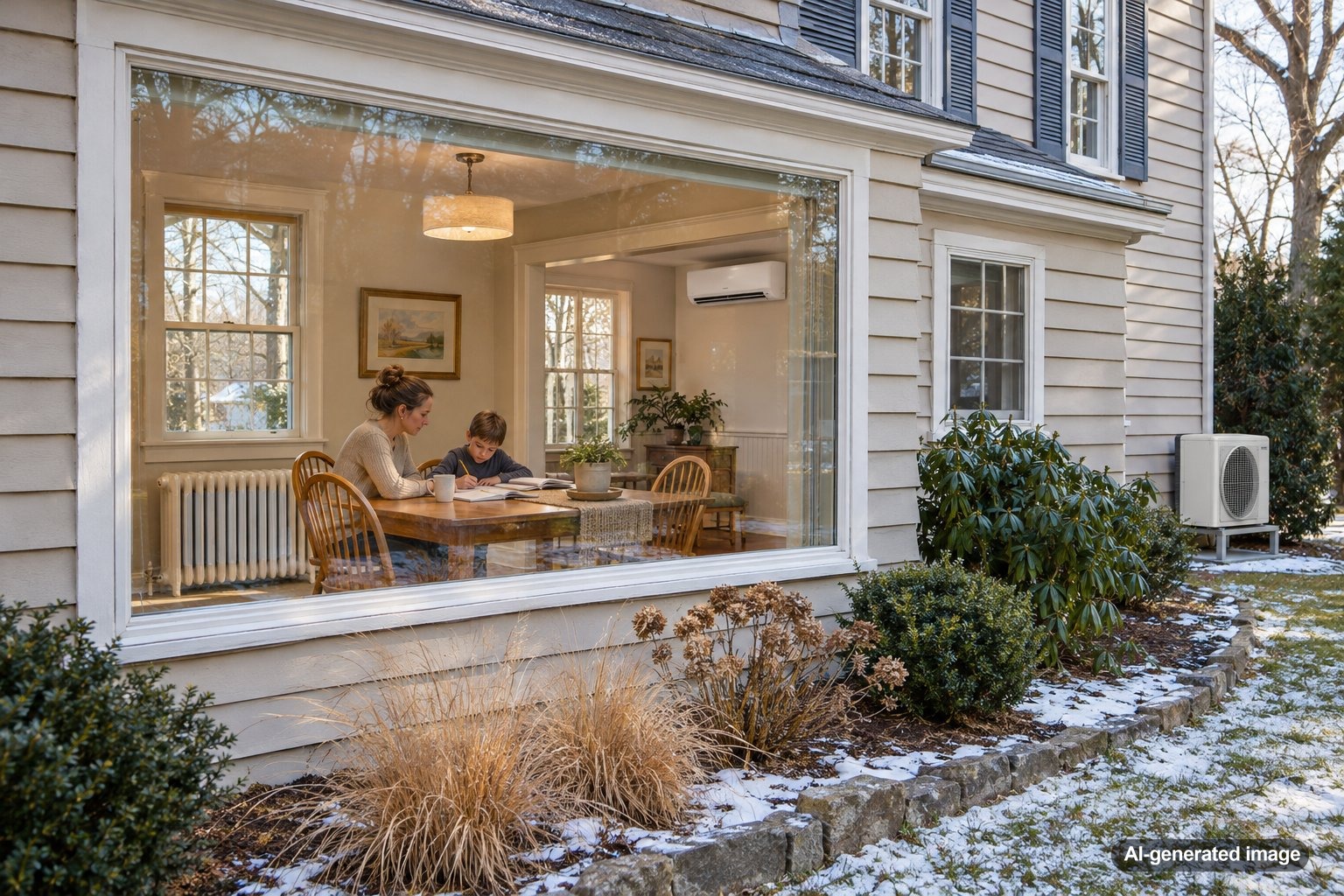
One room feels comfortably warm, another feels like a greenhouse, and the bedroom at the end of the hallway never seems to catch up. Why can a home with radiators and ductless units have conflicting winter temperatures? The problem often comes down to two independent heating systems responding to different temperature readings, operating on different heating cycles, and distributing warmth in fundamentally different ways. Both systems may be working correctly without working particularly well together.
Many older homes throughout Central and Northern New Jersey retain their original radiator heating systems while benefiting from newer ductless mini split heating and cooling systems. This combination offers considerable flexibility, but achieving consistent winter comfort requires more coordination than simply setting every thermostat to the same temperature.
Radiators and ductless units can produce conflicting winter temperatures because they measure room conditions differently, deliver heat at different rates, and may operate without communicating with one another. Heat from a ductless unit can satisfy a boiler thermostat prematurely, leaving other rooms cold. Meanwhile, radiators may continue releasing stored heat after the ductless system has already reached its target temperature.
Radiators and Ductless Units Deliver Heat Differently
Traditional radiators transfer heat into a room through a combination of thermal radiation and natural air convection. Depending on the system, they receive steam or hot water from a central boiler. Their metal surfaces can retain considerable warmth after the boiler stops operating.
Ductless heat pumps transfer heat from outdoor air into the home through a refrigerant-based system. An indoor fan distributes heated air throughout the room, and many modern units adjust their output continuously as heating requirements change.
These differences matter when both systems serve the same living space. A ductless unit can raise the air temperature while the radiators are still warming up. Later, the radiators may continue releasing heat even after the ductless unit has reduced its output.
The resulting temperature swings can make a room uncomfortable even when neither system has an obvious mechanical problem.
Why Matching Thermostat Settings Does Not Always Work
Setting the boiler thermostat and ductless remote to 70 degrees Fahrenheit might seem like the simplest solution. Unfortunately, those settings do not necessarily represent identical room conditions.
A wall-mounted boiler thermostat typically measures air temperature at its installed location. A ductless indoor unit may measure temperature near its air intake, which is frequently positioned high on a wall.
Because warm air tends to accumulate near the ceiling, the ductless unit may sense a higher temperature than someone sitting on a couch several feet below. Some equipment supports remote temperature sensors or controllers that measure conditions elsewhere, but capabilities vary by model.
Differences in sensor location, calibration, and equipment control logic can cause two systems with identical settings to respond at noticeably different times.
How a Ductless Unit Can Leave Other Radiator-Heated Rooms Cold
Consider a traditional two-story New Jersey home with a boiler thermostat in the downstairs living room. A ductless unit was added to that same room to improve summer cooling and provide supplemental winter heat.
When the ductless unit warms the living room, the boiler thermostat may conclude that the home’s heating needs have been satisfied. It stops calling for heat even though the upstairs bedrooms, bathroom, and other radiator-heated spaces remain chilly.
Increasing the boiler thermostat setting may temporarily warm those distant rooms, but it can also cause the living room to become excessively warm when both systems operate.
This is particularly common when a single boiler thermostat controls several rooms with different heating requirements. The thermostat responds to its immediate surroundings rather than measuring comfort throughout the entire house.
Why Radiator Heat Can Overshoot the Desired Temperature
Radiators do not necessarily stop delivering warmth the moment a thermostat is satisfied. Cast-iron radiators, in particular, can retain heat and continue warming nearby air and surfaces.
If a ductless unit is also operating during the boiler’s heating cycle, the combined output may exceed what the room needs. By the time both systems reduce or stop active heating, the room temperature may already be above the desired setting.
Steam and hot water radiator systems also have different operating characteristics. Steam distribution depends on factors such as venting and pressure, while hot water systems depend on water circulation, temperature, and system configuration. A technician must consider the specific type of radiator system before recommending changes.
Older Floor Plans Can Make Temperature Differences Worse
Many homes in Central and Northern New Jersey were originally designed around individual rooms rather than large, open living areas. Renovations, additions, converted attics, and finished basements can further complicate heat distribution.
A ductless unit installed in an open living and dining area may provide excellent comfort there without delivering enough warmth through a narrow hallway or closed bedroom door. Radiators in those separate rooms may still be essential.
Other building characteristics can contribute to conflicting temperatures:
- Drafty windows and exterior doors that increase heat loss in individual rooms.
- Uneven insulation between original construction and newer additions.
- Stairwells that allow warm air to collect on upper floors.
- South-facing rooms that gain significant warmth from winter sunlight.
- Furniture or window treatments that interfere with heat distribution around radiators or ductless units.
- High ceilings that allow heated air to accumulate above occupied areas.
Even carefully coordinated thermostats cannot completely compensate for significant differences in room-by-room heat loss.
Cold Weather Changes How the Two Systems Interact
A heating arrangement that works well during a mild November afternoon may behave differently during a January cold snap.
Ductless heat pump heating capacity and efficiency vary with outdoor temperatures and equipment design. Cold-climate models can provide useful heating at low outdoor temperatures, but their performance depends on the specific equipment and installation.
Heat pumps also periodically enter defrost cycles to remove frost from outdoor coils. Indoor heat delivery may temporarily decrease during these cycles, depending on the equipment. Radiator heat can help maintain comfort during those periods if the systems are appropriately coordinated.
However, an independently controlled boiler does not necessarily recognize when a ductless heat pump enters defrost mode. Each system may continue responding only to its own thermostat.
Should Radiators or Ductless Units Provide the Primary Heat?
There is no universal answer. The most appropriate arrangement depends on the home’s layout, insulation, boiler fuel, utility rates, ductless equipment capabilities, and the number of rooms each system serves.
Radiators as the Primary Heating System
This arrangement may make sense when radiators serve most of the house and ductless units are installed in only a few locations. The boiler provides the main source of winter heat, while ductless units supplement comfort in rooms with additional heating needs.
Ductless Units as the Primary Heating System
Homes with extensive ductless coverage and appropriately sized cold-weather equipment may benefit from using heat pumps as their main heating source under certain conditions. Radiators can provide supplemental heat where ductless coverage is limited or additional capacity is needed.
Coordinated Room-by-Room Heating
Some homes benefit from assigning different heating responsibilities to different areas. Rather than having both systems compete for control of the same space, a professional may recommend separate temperature targets, operating schedules, or compatible control strategies.
Appropriate HVAC zoning solutions may improve temperature management, although existing boiler configurations and ductless equipment compatibility must be evaluated first.
Safe Checks Homeowners Can Make Before Scheduling Service
Understanding when and where temperature conflicts occur can help distinguish a coordination issue from a possible equipment problem. You do not need to open equipment or adjust mechanical components to collect useful information.
- Confirm that ductless units intended to provide winter heating are set to heating mode rather than cooling or an unintended automatic mode.
- Review thermostat schedules and look for overlapping or conflicting temperature changes.
- Use independent room thermometers to compare temperatures at normal occupied heights, away from direct sunlight and heating outlets.
- Observe whether the boiler stops heating shortly after a nearby ductless unit warms the thermostat area.
- Inspect accessible ductless air filters according to the manufacturer’s instructions.
- Make sure furniture, curtains, and other objects are not restricting normal heat distribution.
- Record whether temperature differences become more pronounced overnight or during colder outdoor conditions.
A simple temperature log covering several days can be especially helpful. Include thermostat settings, actual room temperatures, outdoor conditions, and which heating systems appear to be operating.
Avoid repeatedly changing settings throughout the day. Frequent adjustments can obscure the original pattern and make it harder to determine why temperatures are conflicting.
When Conflicting Temperatures Need Professional Attention
Occasional differences between rooms are not necessarily evidence of a failing heating system. Persistent overheating, inadequate heat, unusually frequent equipment cycling, or substantial temperature swings deserve closer examination.
An HVAC technician can evaluate several factors that homeowners cannot reliably assess through thermostat readings alone:
- Whether boiler thermostat placement is appropriate for the combined heating arrangement.
- Whether radiator distribution and existing heating zones are functioning correctly.
- Whether ductless temperature sensors accurately represent occupied room conditions.
- Whether ductless equipment has sufficient heating capacity for the spaces it serves.
- Whether compatible controls could reduce unnecessary overlap between heating systems.
- Whether building heat loss is contributing to persistent cold spots.
In some cases, the solution may involve control adjustments rather than equipment replacement. Other homes may require changes to zoning, thermostat placement, or heating distribution. A complete assessment helps determine which improvements are appropriate without unnecessarily replacing functioning equipment.
Frequently Asked Questions About Radiators and Ductless Winter Heating
Can radiators and ductless heat pumps run at the same time?
Yes. Both systems can operate simultaneously, provided they are functioning safely and appropriately configured. However, overlapping heat output can create overheating or unnecessary energy consumption when the systems are not coordinated.
Why are my radiators cold when my mini split is running?
The mini split may be warming the area around the boiler thermostat enough to prevent a call for radiator heat. If other rooms remain cold, thermostat placement and heating zone configuration may need professional evaluation. Other boiler or distribution issues are also possible.
Should my boiler thermostat be set higher or lower than my ductless unit?
The correct relationship depends on which system is intended to provide primary heating, where the thermostats measure temperature, and how the home is divided into heating zones. There is no single temperature difference that works for every installation.
Can automatic mode cause heating conflicts during winter?
On equipment with automatic heating and cooling changeover, radiator heat may raise the room temperature enough to trigger cooling under certain settings. Dedicated heating mode may help avoid this conflict when the ductless unit is intended to provide winter heat. Check the equipment’s operating instructions.
Will a smart thermostat automatically coordinate both heating systems?
Not necessarily. A smart thermostat controlling the boiler may have no direct communication with independently controlled ductless units. Effective coordination depends on equipment compatibility, available controls, and the home’s heating configuration.
Make Your Two Heating Systems Work Toward the Same Comfort Goal
Having radiators and ductless units does not have to mean choosing between overheated living spaces and cold bedrooms. Both technologies can serve useful roles in a New Jersey home when their operating responsibilities are clearly defined.
The objective is not simply to make every thermostat display the same number. It is to achieve comfortable temperatures throughout the occupied areas of the home while avoiding unnecessary competition between heating systems. Evaluating thermostat placement, room coverage, equipment performance, and heating schedules together can help identify a more practical approach to winter comfort.
Need help with your heating, cooling, or HVAC system?
Meyer & Depew serves homeowners and businesses throughout Central and Northern New Jersey.
Get a quote or call 908.272.2100.