

How Summer Humidity Can Affect Indoor Air Quality
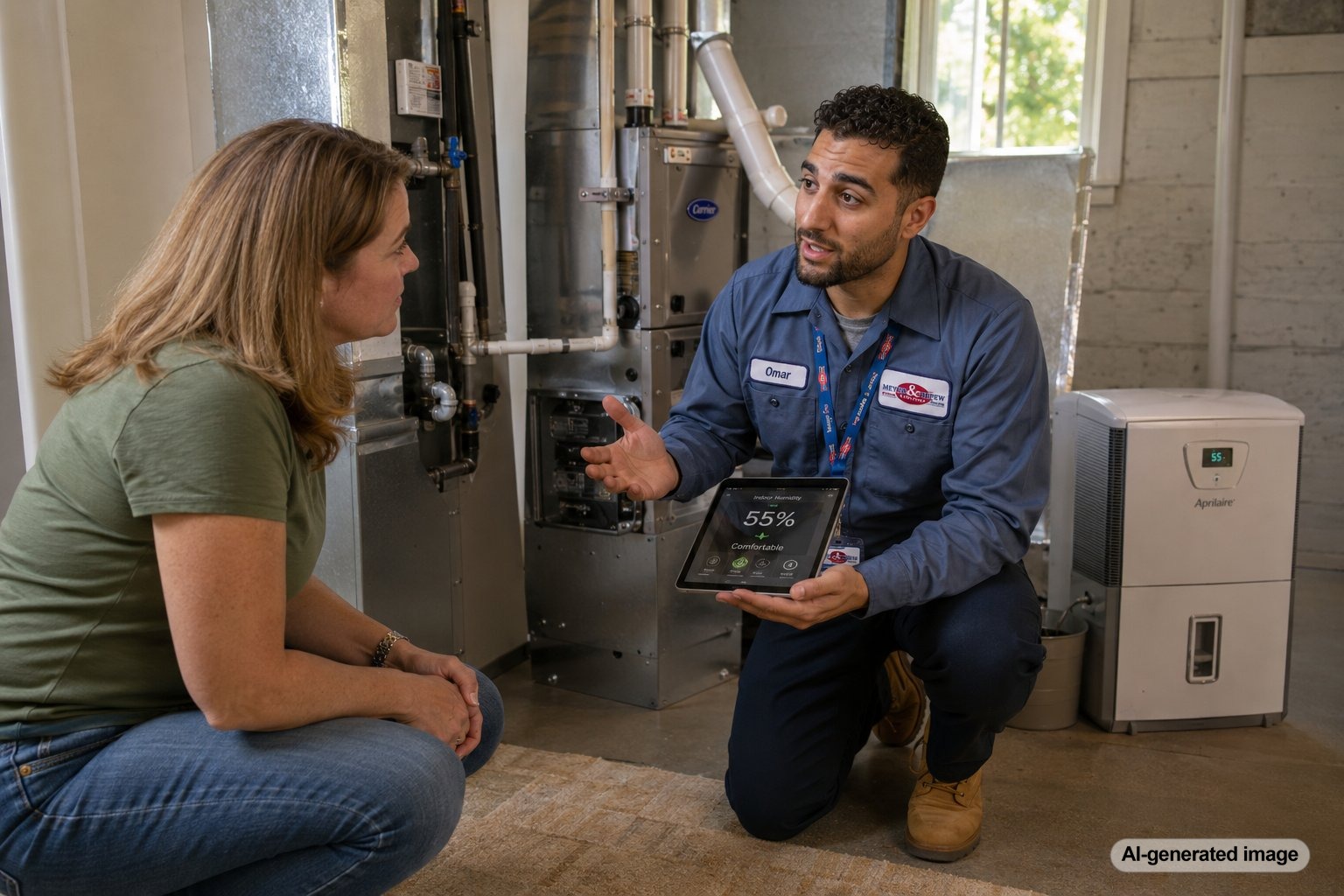
Summer humidity can affect indoor air quality by making your home or business feel stuffy, damp, and harder to cool. In Central and Northern New Jersey, humid outdoor air often works its way indoors through open doors, leaky ductwork, older windows, basements, crawl spaces, and normal daily activity. Once that moisture builds up, it can influence comfort, odors, airborne particles, and how your HVAC system performs.
Humidity is not just about feeling sticky. When indoor moisture stays too high, dust can cling to surfaces, musty smells may become more noticeable, and some allergens or biological growth concerns may become harder to manage. Good air quality and comfort often depend on the right balance of temperature, airflow, filtration, ventilation, and humidity control.
Summer humidity can make indoor air feel heavy, encourage musty odors, strain cooling equipment, and make rooms feel warmer than the thermostat setting suggests. Keeping indoor humidity in a comfortable range may help improve comfort, reduce dampness, and support better overall indoor air quality.
Why Humidity Changes The Way Indoor Air Feels
Air that contains too much moisture can feel warmer and less comfortable because sweat does not evaporate as easily from your skin. That is why a room at 74 degrees can feel pleasant on a dry day but clammy during a humid New Jersey afternoon. The thermostat may show that your AC is cooling, yet the space can still feel uncomfortable.
This is one reason homeowners sometimes lower the thermostat again and again during muggy weather. The issue may not be temperature alone. If the system is not removing enough moisture, rooms can feel damp, uneven, or slow to cool even when the equipment is running.
How High Humidity Can Affect Indoor Air Quality
High humidity can create conditions that make indoor air feel less fresh. Damp air may contribute to musty odors, especially in basements, laundry rooms, bathrooms, kitchens, and rooms with limited airflow. In some homes, humidity can also make everyday odors from cooking, pets, or stored items linger longer.
Moisture can also affect particles inside the home. Dust, pollen, and other irritants may feel more noticeable when airflow is poor and surfaces stay slightly damp. For households dealing with allergy concerns, stale air, or recurring odors, humidity control may be one part of a broader indoor air quality plan that can also include filtration, air purification systems, and better ventilation.
Why Your AC Matters In Humid Weather
Your air conditioner removes some moisture as it cools the air, but it has to run properly to do that well. If an AC system is oversized, short cycling, low on airflow, or struggling with maintenance issues, it may cool the space quickly without running long enough to remove enough humidity. The result can be cool but damp air.
Restricted airflow can also reduce dehumidification. A clogged filter, blocked return, dirty indoor coil, or duct issue may limit how much air moves across the system. That can affect both comfort and efficiency. If your AC runs often but your home still feels muggy, professional AC service and maintenance can help identify whether airflow, equipment condition, sizing, or control settings are part of the problem.
Common Signs Humidity Is Affecting Your Indoor Air
Humidity problems can show up in small ways before they feel like a major comfort issue. Paying attention to patterns can help you decide when it is time to take action.
- Rooms feel sticky or clammy even when the AC is running.
- Musty odors appear in basements, closets, or rooms with poor airflow.
- Windows, vents, or surfaces show condensation during humid periods.
- The thermostat setting keeps getting lowered, but comfort does not improve much.
- Some rooms feel cooler than others while still feeling damp.
- Air feels stale after cooking, showering, or high-occupancy periods.
Safe Checks Homeowners Can Make First
There are a few simple checks that may help before scheduling service. These steps should stay limited to safe, visible items and basic operating settings.
- Inspect or replace the air filter if it is dirty.
- Make sure supply and return vents are open and not blocked by furniture, rugs, or curtains.
- Check that the thermostat is set to cooling mode and that the fan setting is not accidentally left on continuously if that seems to worsen dampness.
- Use bathroom and kitchen exhaust fans during showers and cooking when available.
- Look for obvious water intrusion, damp basement areas, or standing water near equipment, and call a qualified professional if there are safety concerns.
If the issue continues, avoid opening equipment panels, working around electrical components, adjusting refrigerant, or trying to modify the system yourself. Moisture problems can involve airflow, drainage, ductwork, controls, equipment sizing, or building conditions that should be evaluated by a qualified technician.
Humidity Control Is Part Of A Larger IAQ Strategy
Better indoor air quality usually comes from several pieces working together. Filtration helps capture particles. Ventilation helps dilute stale indoor air. Air purification may help address certain airborne contaminants. Humidity control helps keep moisture from making the home feel damp and uncomfortable.
For some homes, especially older homes, finished basements, additions, or houses with uneven comfort, a whole-home humidity solution may be worth discussing. In other cases, AC maintenance, duct improvements, thermostat settings, or ventilation changes may be more appropriate. The right answer depends on the home, the equipment, and how the problem shows up.
When To Call A Professional
It is time to schedule service if the AC runs frequently but the home still feels muggy, if musty odors keep returning, if condensation appears in unusual places, or if certain rooms never feel comfortable. A technician can evaluate airflow, refrigerant-side performance, coil condition, drainage, ductwork, thermostat controls, and whether the system is operating as intended.
For commercial properties, humidity issues can also affect occupant comfort, odor control, stored materials, and customer experience. Offices, retail spaces, medical offices, nonprofit facilities, and multi-zone buildings may need a more detailed look at ventilation, rooftop units, schedules, controls, and maintenance practices.
FAQ: Summer Humidity And Indoor Air Quality
What indoor humidity level is usually comfortable?
Many people are most comfortable when indoor humidity is kept in a moderate range, but the right target can vary by building, season, and comfort needs. If your home feels damp even when it is cool, humidity is worth evaluating.
Can my AC remove enough humidity on its own?
Sometimes, yes. A properly sized and maintained AC system often removes moisture as it cools. If the system short cycles, has airflow problems, or is not matched well to the space, it may not control humidity as well as expected.
Does high humidity make indoor air unhealthy?
High humidity does not automatically mean the air is unsafe, but it can contribute to dampness, odors, discomfort, and conditions that may make indoor air quality concerns more noticeable. Persistent moisture problems should be addressed.
Can air purifiers fix humidity problems?
Air purifiers and dehumidification do different jobs. Air purification may help with certain airborne particles or contaminants, while humidity control addresses excess moisture. Some homes may benefit from both as part of a broader IAQ plan.
Summer humidity can make indoor air feel heavy, stale, and uncomfortable even when your AC is running. If dampness, odors, or uneven comfort keep coming back, the solution may involve HVAC maintenance, airflow improvements, ventilation, air purification, or dedicated humidity control.
Need help with your heating, cooling, or HVAC system?
Meyer & Depew serves homeowners and businesses throughout Central and Northern New Jersey.
Get a quote or call 908.272.2100.