



What Causes Condensation Around AC Vents?
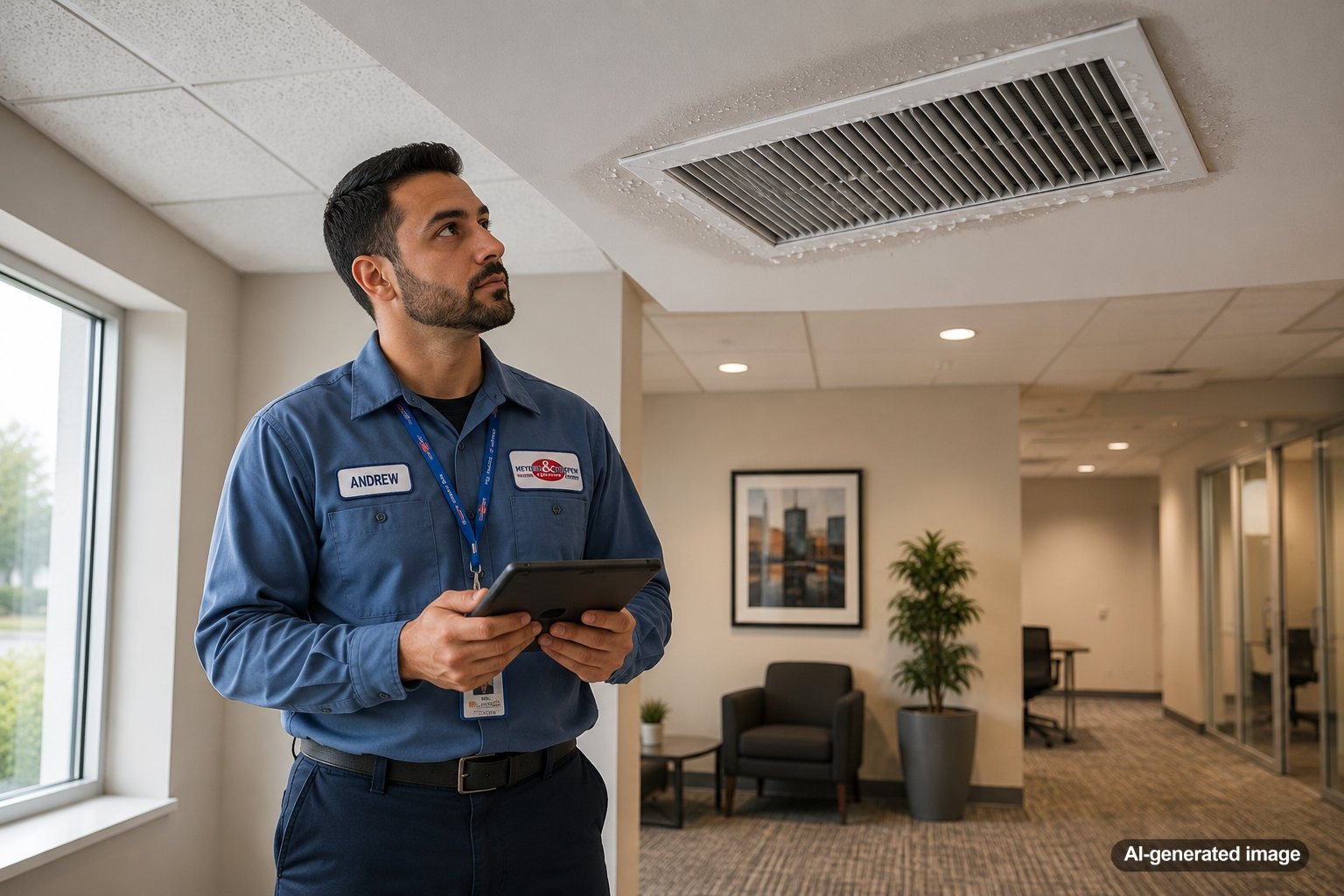
Condensation around AC vents usually happens when warm, humid air meets a cold vent surface. In Central and Northern New Jersey, that can be especially noticeable during sticky summer weather, when indoor humidity is high and your air conditioning system is working hard. A small amount of moisture near a vent may not mean something is seriously wrong, but recurring sweating, stained ceilings, dripping water, or damp drywall should not be ignored.
In many homes, vent condensation is connected to airflow, humidity, insulation, duct temperature, or an AC system that needs attention. If the moisture keeps coming back, Meyer & Depew can help evaluate the cooling system, duct conditions, and indoor comfort factors through professional AC service and maintenance.
Condensation around AC vents is most often caused by humid indoor air touching cold metal or plastic vent surfaces. Common contributing factors include high indoor humidity, restricted airflow, dirty filters, poorly insulated ductwork, air leaks around the vent, or an AC system that is running too cold or not moving enough air.
Why AC Vents Sweat
Your AC system removes heat and moisture from indoor air. As cooled air moves through ducts and out of supply vents, the vent cover can become cold. When humid air from the room touches that cold surface, moisture in the air can condense into water droplets. It is similar to the way a cold glass sweats on a humid day.
The key issue is the balance between temperature and humidity. The colder the vent surface and the more humid the surrounding air, the more likely condensation becomes. In a New Jersey home with summer humidity, poor airflow, or leaky ductwork, that balance can shift quickly.
Common Causes Of Condensation Around AC Vents
High indoor humidity
Humidity is one of the biggest reasons vents sweat. If indoor air holds too much moisture, cold AC vents can collect droplets even when the cooling system is otherwise operating. This may happen during humid weather, after cooking or showering, in homes with poor ventilation, or in spaces where outside air is entering through gaps and leaks.
If the home feels clammy even when the temperature is comfortable, the issue may involve more than the vent itself. Indoor humidity, ventilation, equipment sizing, run time, and air quality solutions can all affect comfort. Meyer & Depew’s Air Quality & Comfort services can help homeowners explore options when humidity is part of a larger comfort problem.
Restricted airflow
Airflow problems can make parts of the system colder than they should be. A dirty air filter, blocked return, closed supply vents, or furniture covering registers can reduce the amount of air moving across the cooling coil and through the duct system. When airflow drops, duct and vent surfaces may become colder, increasing the chance of condensation.
Restricted airflow can also make the home less comfortable. You may notice weak air from vents, uneven room temperatures, longer run times, or an AC system that seems to struggle during hot weather. If these symptoms appear with vent condensation, it is worth scheduling professional service before the issue contributes to a larger cooling problem.
Air leaks around the vent or ductwork
Gaps around a ceiling vent, loose duct connections, or unsealed openings can allow warm, humid air from an attic, wall cavity, basement, or crawlspace to meet cold supply air. That temperature difference can create condensation around the register, nearby drywall, or duct boot.
This is especially common when ducts pass through unconditioned areas. If humid attic air is leaking into the area around a cold duct or vent, the visible moisture may be only part of the issue. A qualified technician can look for duct leakage, insulation gaps, and installation concerns that are not always obvious from inside the room.
Poor duct insulation
If ducts run through a hot attic, garage, crawlspace, or other unconditioned space, they need proper insulation to keep the outside surface from becoming a condensation point. Poorly insulated ducts can sweat when humid air reaches the cold duct surface. Over time, that moisture may stain building materials, affect insulation, or create musty odors.
Insulation problems are not always visible at the vent grille. Moisture may collect above the ceiling or inside a chase before you see signs below. Water stains, peeling paint, damp ceiling tiles, or a musty smell near vents are good reasons to have the duct area evaluated.
An AC system that is operating too cold
In some cases, condensation around vents may be related to the AC system running unusually cold because of airflow issues, refrigerant concerns, coil problems, or controls that are not operating correctly. Homeowners should not try to add refrigerant, open sealed equipment, bypass controls, or troubleshoot electrical components. Those tasks require trained HVAC service.
If you see heavy condensation along with ice on refrigerant lines, a frozen coil, poor cooling, or frequent system cycling, turn the system off if needed to prevent further icing and schedule service. A technician can evaluate the system safely and identify whether the condensation is a symptom of a mechanical or airflow problem.
- Check whether the thermostat is set to a reasonable cooling temperature and fan setting.
- Inspect or replace a dirty air filter.
- Make sure supply vents and return grilles are open and not blocked by furniture, rugs, curtains, or storage.
- Look for obvious moisture stains, dripping, musty smells, or loose vent covers.
- Check whether the issue happens in one room only or throughout the home.
When Vent Condensation Is More Than A Minor Nuisance
Occasional light sweating during extremely humid weather may dry up once humidity levels improve. Repeated moisture, however, deserves attention. Water around vents can stain ceilings, damage paint, affect nearby drywall, and create conditions where musty odors can develop.
Patterns matter. Condensation at one vent may point to a localized duct, insulation, or air-sealing issue. Condensation at many vents may suggest high indoor humidity, low airflow, or a broader system concern. Moisture that appears only when the AC runs may indicate the vent surface is becoming too cold or humid air is reaching the ductwork.
What Homeowners Should Avoid
Do not cover vents with tape, plastic, or towels as a long-term fix. Blocking airflow can make the underlying problem worse and may affect comfort in other rooms. Do not open HVAC equipment panels, adjust refrigerant lines, bypass safety controls, or attempt electrical repairs.
It is also best not to assume the vent grille is the only problem. Replacing a register may improve appearance, but it will not solve high humidity, duct leakage, poor insulation, or airflow restrictions. The better approach is to identify why the vent is getting cold enough, or why the surrounding air is humid enough, to create condensation.
When To Schedule Professional AC Service
Schedule AC service if condensation keeps returning, water is dripping from vents, ceiling stains appear, airflow feels weak, the home feels humid, or the system is icing up. These symptoms can point to conditions that are difficult to evaluate without proper tools and training.
A technician can inspect filters, coils, blower performance, duct conditions, drain operation, thermostat settings, and visible signs of moisture. Depending on the situation, the solution may involve maintenance, airflow correction, duct sealing, insulation improvements, humidity control, or equipment evaluation. For ongoing comfort and maintenance support, homeowners can also review Meyer & Depew’s Service Plans.
FAQ: Condensation Around AC Vents
Is condensation around AC vents normal?
A small amount can happen during very humid weather, but repeated sweating, dripping, staining, or damp drywall is not something to overlook. It often means humidity, airflow, duct insulation, or system performance should be checked.
Can a dirty air filter cause vent condensation?
Yes, a dirty filter can restrict airflow. Reduced airflow can make parts of the AC system and ductwork colder than normal, which may increase the chance of condensation forming around vents.
Why does only one vent have condensation?
One sweating vent may point to a local issue such as an air leak around the vent boot, poor duct insulation, a duct running through a hot or humid space, or a room with higher humidity than the rest of the home.
Should I close vents to stop condensation?
No. Closing vents can reduce airflow and may make cooling problems worse. It is safer to keep vents open, check for blocked returns or dirty filters, and schedule service if the moisture continues.
Can humidity control help?
It may help if high indoor humidity is part of the problem. A qualified HVAC professional can evaluate whether ventilation, humidity control, duct improvements, or AC maintenance would be appropriate for your home.
Condensation around AC vents is usually a sign that cold surfaces, humid air, and airflow conditions are not in the right balance. If basic checks do not solve it, professional HVAC service can help identify the cause before moisture leads to comfort issues or building damage.
Need help with your heating, cooling, or HVAC system?
Meyer & Depew serves homeowners and businesses throughout Central and Northern New Jersey.
Get a quote or call 908.272.2100.