



Why Do Floor Vents Near Exterior Walls Feel Different in Heating Season?
Estimated reading time: 12 minutes
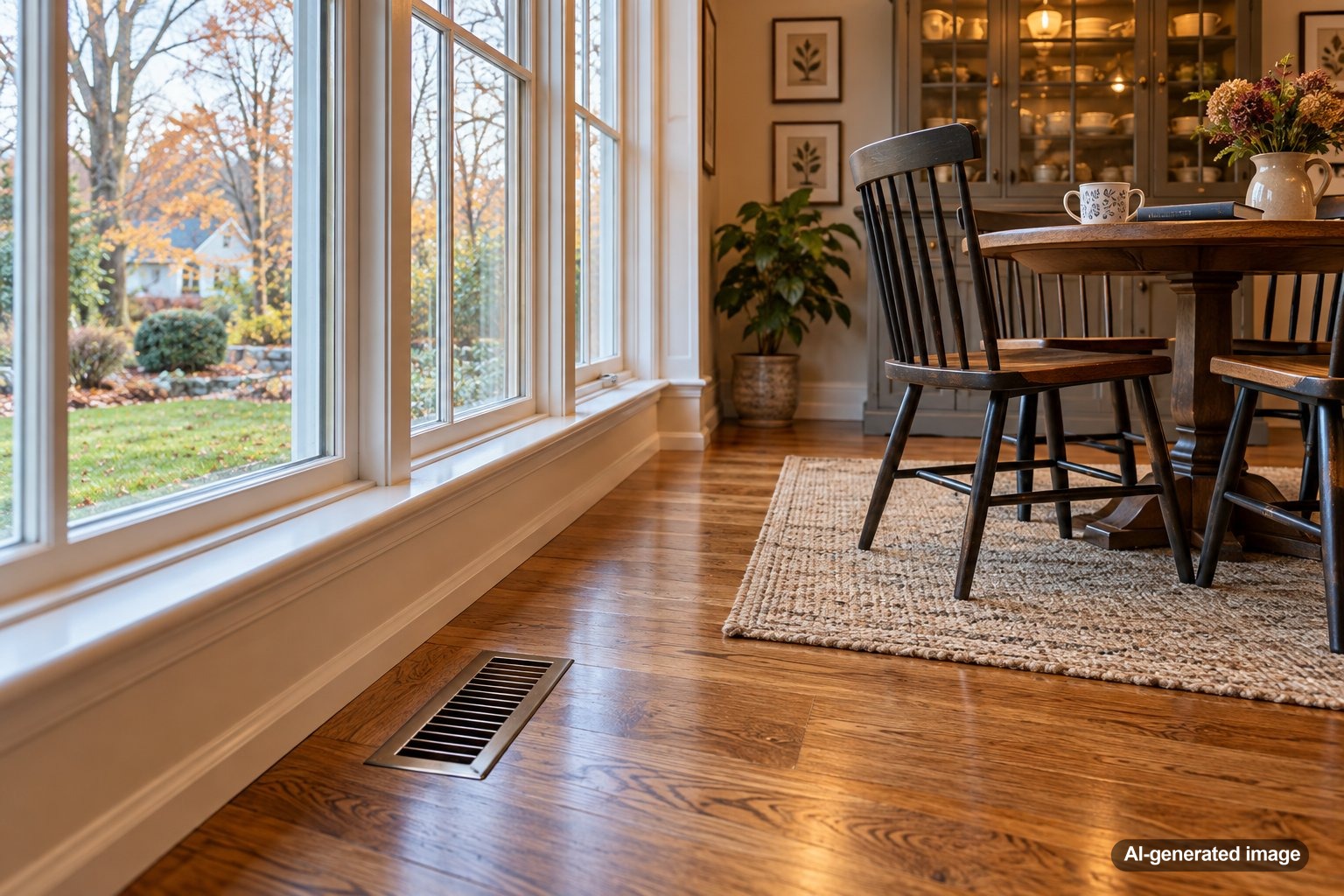
You walk across your living room on a cold New Jersey morning and notice something strange. The floor vent near an outside wall feels noticeably cooler than the vent closer to the center of the house, even though both are connected to the same heating system. Maybe the air coming out seems different, or perhaps the floor around one register feels unusually chilly. Before assuming something is wrong with your furnace or heat pump, it helps to understand how exterior walls, duct placement, airflow, and the building itself can affect what you feel.
Floor vents near exterior walls can feel different during heating season because they sit in areas where heat loss and cold surfaces influence comfort. Sometimes the difference is completely normal. Other times, it points to duct leakage, insufficient insulation, restricted airflow, or a heating distribution problem worth investigating. Understanding which situation applies can help you avoid unnecessary adjustments while identifying issues that deserve professional attention.
Floor vents near exterior walls may feel cooler because of several overlapping conditions:
- Cold windows and exterior walls lower the surrounding room temperature.
- Supply ducts running through colder spaces may lose heat before air reaches the register.
- Gaps around the register or floor opening can allow cold air to enter the room.
- Long duct runs, airflow restrictions, and duct leakage can affect delivered air temperature and volume.
- The location of the vent can change how warm air mixes with cooler air near windows and walls.
Why Exterior Wall Locations Change the Way a Floor Vent Feels
An exterior wall separates your heated living space from outdoor conditions. During a New Jersey winter, that wall, the nearby flooring, and any windows above it may be considerably colder than interior surfaces.
When you stand near a floor register positioned along an outside wall, you may feel cool air moving downward from a window at the same time warm supply air rises from the vent. The two air currents interact, changing the sensation around your feet and ankles.
This can make a properly functioning heating vent seem less effective than another register located near the middle of the room.
Cold Windows Create Downward Air Movement
Room air that comes into contact with a cold window loses heat, becomes denser, and tends to move downward. This natural movement is sometimes called a cold downdraft.
If a floor vent sits below the window, heated supply air may help counteract that downdraft. However, you can still notice cooler air near the floor, especially when outdoor temperatures fall sharply or the window has limited insulating performance.
The sensation is not necessarily evidence that the register itself is delivering cold air. You may be feeling the combined effects of warm supply airflow and nearby cooler air movement.
Cold Flooring Can Affect Your Perception
Floor temperature matters, too. A register surrounded by flooring near an inadequately insulated exterior wall may feel colder underfoot than an identical register in the center of the house.
Hardwood, tile, and other flooring materials can make these temperature differences particularly noticeable. You might interpret the cold surface around the vent as a heating problem even when the air leaving the register is warm.
Why Heating Ducts Can Deliver Different Temperatures to Different Vents
Not every supply register receives air under identical conditions. The route between the heating equipment and the room can affect the temperature and amount of air delivered.
Consider two registers connected to the same forced-air heating system. One has a short duct run through a conditioned interior space. The other is supplied by a longer run that passes through an unheated basement section, crawl space, or another cold area.
The second duct may lose more heat along its route, particularly when its insulation is inadequate or its connections leak. As a result, the air reaching that register could be cooler than the air reaching the first one.
Duct Insulation Makes a Difference
Supply ducts carry heated air through the home. When a duct passes through an unconditioned area, heat can transfer from the air inside the duct to the colder surroundings.
Properly installed duct insulation can reduce that heat transfer. Missing, damaged, or insufficient insulation can contribute to noticeable temperature differences between rooms and registers.
This is one reason older homes in Central and Northern New Jersey sometimes have uneven heating patterns even when the heating equipment appears to operate normally.
Duct Leakage Can Reduce Delivered Comfort
Loose duct connections or gaps in ductwork can allow heated air to escape before reaching its intended destination. Depending on the location of the leakage and the pressure conditions in the duct system, the amount of air reaching a register may decrease.
Some duct leakage conditions can also influence the temperature of the delivered air. A room may feel colder primarily because it receives less warm air, rather than because the air itself is dramatically cooler.
These conditions are best evaluated by a qualified HVAC technician who can examine the duct system and identify where improvements may be appropriate.
Why Some Floor Vents Are Intentionally Installed Near Windows
Finding a floor register near an exterior wall is not automatically a design mistake. In many forced-air heating layouts, supply registers were intentionally placed near windows or perimeter walls to help offset heat loss in those areas.
Warm air introduced near a cold window can reduce the impact of cool air descending along the glass. The goal is to improve comfort where a room is most vulnerable to winter heat loss.
However, actual performance depends on the home’s insulation, window condition, duct design, furniture placement, and the volume of conditioned air reaching the register.
In a well-balanced system, perimeter registers can help make a room more comfortable. In a poorly balanced system, those same registers may be where uneven heating becomes most obvious.
Cold Air Around a Register Is Not Always Coming Through the Supply Duct
One easily overlooked issue is the space surrounding the floor register itself.
A metal register sits inside a cutout in the flooring. Depending on how the home was constructed, the opening around the duct boot may have gaps that connect to a basement, crawl space, wall cavity, or another colder area.
Cold air can sometimes move through those gaps, particularly when pressure differences develop between parts of the building. The resulting draft may be most noticeable when the heating system is off.
This creates an important distinction: cool air moving around the edges of a floor register is different from cool air being delivered through the supply duct.
If the register seems drafty even when the heating equipment is not operating, gaps around the opening or pressure-related air movement may be involved. A professional can help determine whether the problem relates to the building envelope, duct connections, or another condition.
How to Tell Normal Temperature Differences From a Heating Problem
Instead of judging a vent by how it feels during a single moment, pay attention to when the difference occurs and whether the room reaches a comfortable temperature.
The Vent Feels Cooler Only When the System Is Off
Metal registers can become cool when exposed to colder surrounding surfaces. If a register feels chilly between heating cycles but delivers comfortably warm air after the system has been operating, the sensation may reflect normal cooling of the register and nearby floor.
Persistent drafts around the opening still deserve attention, especially if they make the room uncomfortable.
The Vent Delivers Cooler Air Throughout a Heating Cycle
If one register consistently delivers noticeably cooler air than other registers after the heating system has reached steady operation, investigate further.
A long or poorly insulated duct run, leakage, or an airflow issue could contribute. The pattern is especially useful to mention when arranging professional heating service and maintenance.
The Air Feels Warm but the Room Stays Cold
This often suggests a broader comfort issue rather than a simple supply air temperature problem.
The room could be losing heat faster than the delivered airflow can compensate. Possible contributors include drafty windows, inadequate insulation, blocked returns, insufficient supply airflow, or a heating distribution system that is not properly balanced.
The heating equipment may be functioning while the room still struggles to maintain the desired temperature.
Several Rooms Have Different Temperatures
When temperature differences extend beyond one vent, the home’s duct design, airflow balance, thermostat location, and heating zones become more important.
For persistent room-to-room differences, a qualified contractor may evaluate airflow distribution and whether options such as HVAC zoning systems would be suitable for the existing home.
Safe Things Homeowners Can Check Before Scheduling Service
You do not need to open heating equipment or modify ductwork to gather useful information about an unusual floor vent.
- Confirm the thermostat setting. Make sure the system is set to heat and has had time to complete a normal heating cycle.
- Compare vents during the same cycle. Notice whether the difference persists after the system has been running for several minutes rather than comparing vents at unrelated times.
- Check for blocked registers. Furniture, rugs, curtains, and other objects can interfere with supply airflow.
- Inspect the air filter. Replace a dirty filter according to the equipment manufacturer’s recommendations.
- Make sure return grilles are clear. Restricted return airflow can affect heating performance throughout the system.
- Notice when drafts occur. Determine whether cooler air seems to come from the supply opening during operation or from around the register when the system is off.
- Look for room-specific patterns. Note whether the problem becomes worse during windy weather, overnight temperature drops, or particularly cold days.
Keep supply registers open unless your HVAC system was specifically designed and adjusted for a different arrangement. Closing registers to redirect heat can alter system airflow and pressure, potentially creating additional comfort or equipment concerns.
A useful approach is to write down which registers feel different, when you notice the change, and whether the affected room reaches the thermostat’s target temperature. Those observations can help a technician narrow down the possible causes.
Why the Problem May Become More Noticeable in New Jersey Winters
Exterior wall temperature differences become more pronounced when outdoor conditions turn colder. This is particularly relevant during prolonged winter cold spells in Central and Northern New Jersey.
Wind can also affect the way a home feels. Air leakage around windows, exterior penetrations, and construction gaps may become more noticeable when outdoor pressure conditions change.
In older homes, renovations and additions can introduce another complication. A heating system originally designed for one floor plan may now serve rooms with different insulation levels, window areas, or duct routes.
A room above an unheated garage, for example, may have a very different heat loss pattern from an interior bedroom. Even if both receive warm air from similar floor registers, their comfort levels may not match.
These building differences are important because adjusting the thermostat alone will not necessarily correct an uneven distribution or heat loss problem.
When Should You Call an HVAC Professional?
A small difference in how perimeter and interior floor vents feel is not always cause for concern. However, certain patterns make a professional heating evaluation worthwhile.
- One register consistently supplies much less warm air than comparable registers.
- A room remains uncomfortable even while the heating system operates normally elsewhere.
- Cold drafts around a vent have become noticeably worse.
- You hear unusual whistling or airflow noises from the affected duct or register.
- The issue started after renovations, ductwork changes, or heating equipment replacement.
- Temperature differences are significant enough that occupants routinely adjust the thermostat or use supplemental heating.
A qualified technician can evaluate supply airflow, duct conditions, equipment operation, and system balance. Depending on the findings, the appropriate next step might involve duct sealing, insulation improvements, airflow adjustments, or an assessment of the room’s heating requirements.
Not every cold floor vent requires a major repair. Identifying the actual cause is more useful than assuming the heating equipment needs replacement.
If you notice a burning electrical smell, smoke, sparks, or another immediate safety concern, stop using the affected equipment when it is safe to do so and contact the appropriate emergency service or qualified professional. For suspected gas leaks or carbon monoxide exposure, leave the affected area and contact emergency services or your gas utility from a safe location.
Frequently Asked Questions About Floor Vents Near Exterior Walls
Is it normal for a floor vent near a window to feel colder?
It can be. Cold window surfaces, downward air movement, and cooler flooring may make a perimeter register feel different from an interior register. However, a persistent difference in the air being delivered during heating operation may deserve investigation.
Why does cold air seem to come out of my floor vent when the heat is off?
Cold air may be moving through gaps around the register or through parts of the duct system, depending on how the home and its ductwork are configured. The register and surrounding flooring can also cool between heating cycles. A technician can help distinguish a building draft from an HVAC airflow issue.
Should every heating vent in my house blow air at exactly the same temperature?
Not necessarily. Duct length, insulation, heat loss, system design, and operating conditions can create differences. However, a substantial, persistent temperature difference between supply registers during steady operation is worth evaluating.
Can a dirty furnace filter make one floor vent feel colder?
A dirty filter can restrict airflow and reduce heating performance throughout the system. It may make existing airflow imbalances more noticeable, but it does not automatically explain why one particular register feels cooler. If changing a dirty filter does not improve the situation, other causes may need attention.
Will moving a floor vent away from an exterior wall fix uneven heating?
Not necessarily. Many perimeter vents are intentionally located near windows to help counteract heat loss. Moving a register without assessing duct design and room heating requirements could make comfort worse. It is generally better to identify airflow, insulation, and heat loss issues before considering changes to register placement.
The Bottom Line on Exterior Wall Floor Vents
A floor vent near an exterior wall may feel different because it operates in a colder part of the room, receives air through a longer or less protected duct run, or sits beside gaps that allow drafts. The important question is whether the difference is simply noticeable or is preventing the room from heating comfortably.
Start with simple observations: compare registers during the same heating cycle, check for blocked airflow, and pay attention to whether the room actually maintains a comfortable temperature. When the difference persists, a professional assessment can help determine whether the cause is ductwork, airflow distribution, heat loss, or the heating system itself.
Need help with your heating, cooling, or HVAC system?
Meyer & Depew serves homeowners and businesses throughout Central and Northern New Jersey.
Get a quote or call 908.272.2100.