

Why Do Some Homes Need Make-Up Air When Installing Powerful Kitchen Exhaust Fans?
Estimated reading time: 11 minutes
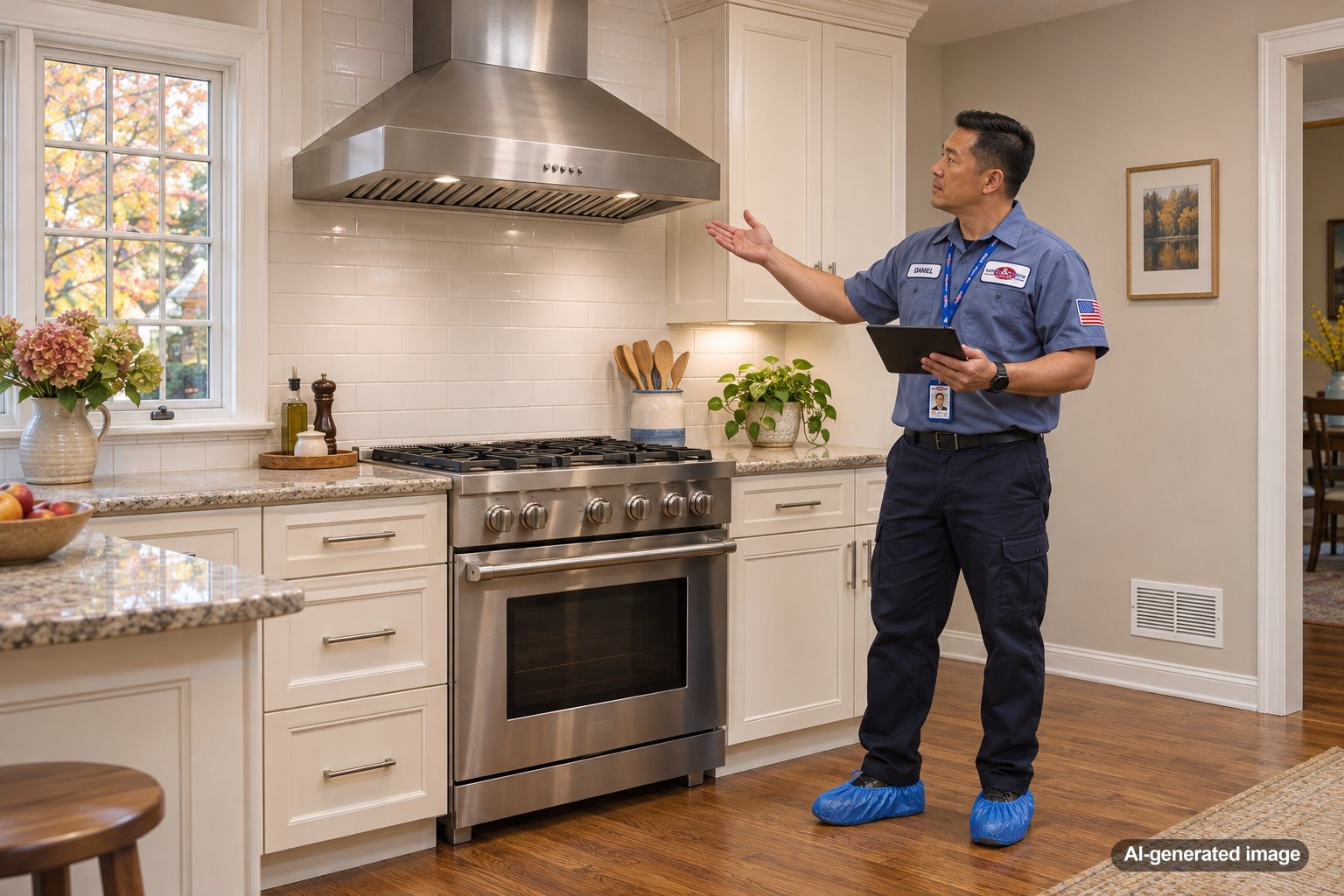
Why do some homes need make-up air when installing powerful kitchen exhaust fans? The answer comes down to a basic principle of building ventilation: air that leaves a house must be replaced by air entering somewhere else. A high-capacity range hood can remove cooking odors, moisture, smoke, and airborne grease effectively, but it can also exhaust air faster than the home can naturally replace it. When that happens, negative indoor air pressure may interfere with ventilation, create uncomfortable drafts, and potentially affect fuel-burning equipment. Understanding how make-up air works is especially important when upgrading a kitchen in a tightly sealed New Jersey home.
Many homeowners focus on the appearance, noise level, and exhaust capacity of a new range hood without considering how it interacts with the rest of the house. Kitchen ventilation is part of a larger system that includes heating, cooling, combustion appliances, and the building envelope. Meyer & Depew helps homeowners throughout Central and Northern New Jersey evaluate indoor air quality and comfort concerns, including the effects of ventilation and airflow.
Some homes need make-up air because powerful kitchen exhaust fans can create excessive negative pressure when replacement air cannot enter the building easily.
- High-capacity range hoods remove substantial amounts of indoor air.
- Tightly sealed homes may not have enough natural air leakage to replace that air safely.
- Negative pressure can contribute to backdrafting, drafts, and ventilation problems.
- Many residential codes use a range hood exhaust capacity above 400 cubic feet per minute (CFM) as a trigger for make-up air requirements, subject to applicable exceptions and local rules.
- A properly designed make-up air system supplies replacement outdoor air in a controlled manner.
What Is Make-Up Air in a Residential Kitchen?
Make-up air is outdoor air intentionally brought into a building to replace air removed by mechanical exhaust equipment. In a residential kitchen, the exhaust equipment is usually a ducted range hood positioned above a cooktop or range.
When the hood operates, it captures cooking contaminants and sends them outdoors through ductwork. Air must enter the house to replace the exhausted volume. If no intentional replacement-air pathway exists, the building may draw air through window gaps, door seals, attic penetrations, fireplaces, or other unintended openings.
A dedicated make-up air system provides a more predictable alternative. Depending on the design, it may include a motorized outdoor-air damper, ductwork, controls linked to the range hood, and equipment that heats or otherwise conditions incoming air.
The objective is not simply to introduce more ventilation. It is to balance the kitchen exhaust with an appropriate supply of replacement air while maintaining safe and comfortable indoor conditions.
Why Powerful Kitchen Exhaust Fans Create Pressure Problems
Kitchen exhaust fans are rated by airflow capacity, generally expressed in cubic feet per minute. A hood rated at 600 CFM, for example, is designed to move up to 600 cubic feet of air each minute under specified operating conditions. Actual installed airflow can differ because of duct length, fittings, external resistance, and operating speed.
When a powerful fan removes air, it lowers indoor pressure relative to outdoors unless enough replacement air enters the house. This pressure difference can pull outdoor air through unexpected pathways.
Tightly Sealed Homes Have Less Natural Air Leakage
Consider two houses with similar kitchen exhaust fans. One is an older home with numerous unsealed openings. The other has undergone extensive air sealing, received modern windows, and has a tightly constructed building envelope.
The older house may admit replacement air through many small gaps, although this uncontrolled leakage is not necessarily safe or comfortable. The tighter house resists incoming airflow, potentially allowing a larger pressure difference to develop.
This distinction matters in Central and Northern New Jersey, where homeowners frequently improve insulation, windows, and weather sealing to reduce heating and cooling losses. A kitchen ventilation upgrade should account for the home’s current construction, not merely its age.
Other Exhaust Equipment Adds to the Demand
The kitchen hood may not be operating alone. Bathroom exhaust fans, clothes dryers, and other equipment can also remove indoor air.
When multiple exhaust devices operate simultaneously, their combined effect may increase building depressurization. A house that seems comfortable with only the kitchen hood running could behave differently when the dryer and bathroom fans operate at the same time.
Professional evaluation can consider these overlapping operating conditions rather than treating the range hood as an isolated appliance.
Can Negative Pressure Affect Furnaces, Water Heaters, and Fireplaces?
One of the most important concerns associated with excessive negative pressure is combustion appliance backdrafting.
Some fuel-burning appliances depend on natural draft to carry combustion gases through a chimney or vent. If indoor pressure becomes sufficiently negative, airflow through the venting system may be disrupted. Under certain conditions, combustion products could enter occupied areas instead of exiting outdoors.
This concern may involve naturally drafted gas water heaters, certain older heating appliances, and fireplaces. Sealed-combustion and direct-vent appliances operate differently and can be less susceptible to room-pressure disturbances, but their installation and operating requirements still matter.
Because combustion gases may contain carbon monoxide, this is a safety issue rather than simply a comfort problem.
Important: Maintain working carbon monoxide alarms as required, and never assume an exhaust system is safe merely because no unusual odor is present. If a carbon monoxide alarm sounds or combustion gases are suspected, leave the building and contact emergency services or the appropriate utility. Do not attempt to correct combustion venting problems yourself.
When Does a Kitchen Range Hood Require Make-Up Air?
A commonly referenced threshold in residential mechanical codes is a kitchen exhaust system capable of exhausting more than 400 CFM. Under provisions based on the International Residential Code, such systems generally require approximately equivalent make-up air, with exceptions and additional conditions that may apply.
The 400 CFM figure is a code-related threshold, not a guarantee that every smaller hood is safe without make-up air or that every larger hood requires an identical installation. Applicable code editions, local amendments, appliance characteristics, and building conditions can affect the requirements.
For New Jersey homeowners, the correct starting point is the residential building and mechanical code requirements enforced for the specific project. Local construction officials can clarify permitting and inspection requirements.
Why the Fan’s Rated Capacity Matters
A homeowner may purchase a powerful hood but expect to operate it only at a low setting. That expectation does not necessarily eliminate a make-up air requirement.
Code provisions frequently consider the exhaust system’s rated capacity rather than relying solely on the homeowner’s preferred operating speed. Manufacturer documentation, approved configurations, and any permissible airflow-limiting controls may influence how an installation is evaluated.
For example, a range hood marketed at 600 CFM should not automatically be treated as a 300 CFM system simply because its owner generally uses a lower speed.
A qualified installer should verify the equipment specifications and applicable requirements before installation.
How a Make-Up Air System Works
A residential make-up air system generally creates a controlled pathway for outdoor air to enter when the kitchen exhaust fan operates.
In a relatively simple arrangement, a motorized damper opens in coordination with the range hood. More involved systems may use powered supply fans, airflow controls, filtration, and equipment to temper incoming air.
The appropriate design depends on the amount of exhaust airflow, duct resistance, available installation space, climate, and the relationship between the kitchen and the home’s heating and cooling systems.
Passive Versus Powered Make-Up Air
A passive make-up air arrangement allows outdoor air to enter through a controlled opening, relying on pressure differences to move the air. This approach may be suitable in some applications, but airflow can vary with wind, building tightness, and pressure conditions.
A powered system uses a supply fan to deliver replacement air more actively. It may offer greater control when exhaust requirements are substantial or when a passive pathway cannot deliver sufficient airflow.
Neither approach should be chosen solely because it appears simpler. The design must provide appropriate airflow while meeting relevant code and safety requirements.
Why Incoming Air Temperature Matters in New Jersey
Outdoor air is not always comfortable air. During a New Jersey winter, bringing a large volume of cold air directly into a kitchen can produce drafts and increase the heating load. During humid summer weather, incoming outdoor air may increase the cooling and moisture-removal demands on the home.
Conditioned or tempered make-up air arrangements can help address these issues when the design and applicable requirements call for them.
Homeowners considering major ventilation changes may benefit from reviewing how outdoor-air intake interacts with their home ventilation options and existing HVAC equipment.
Why Opening a Window Is Not Always an Adequate Solution
Opening a window while operating a range hood may temporarily provide a path for replacement air. However, that does not make it an automatic substitute for a properly designed and code-compliant make-up air system.
Window opening area, wind direction, outdoor temperature, and the homeowner’s willingness to keep the window open can all affect performance.
During freezing weather or heavy rain, relying on an open window may be particularly impractical. A code-required make-up air installation may also need to operate automatically when the exhaust fan runs.
Homeowners should not assume that an operable window satisfies applicable mechanical requirements without confirmation from the local code authority and a qualified professional.
How to Plan a Range Hood Upgrade Before Remodeling
The best time to address make-up air is before purchasing the exhaust equipment or finalizing a kitchen renovation.
Begin by identifying the selected hood’s rated airflow and reviewing its installation requirements. A larger decorative hood does not necessarily need the highest available fan capacity, and an excessively powerful system may introduce avoidable design complications.
Next, consider where replacement air could enter. Duct routing, wall penetrations, outdoor intake placement, nearby exhaust outlets, and access for future maintenance all influence the installation.
It is also important to identify fuel-burning appliances, fireplaces, and other exhaust equipment. A professional may need to evaluate building pressure and combustion safety under representative operating conditions.
Finally, coordinate kitchen contractors, ventilation installers, and HVAC professionals before cabinets, ceilings, and finished surfaces make additional ductwork more difficult to install.
- Locate the range hood model number and confirm its published CFM rating.
- Determine whether the hood exhausts outdoors or recirculates air through filters.
- Make a list of existing fireplaces, furnaces, water heaters, dryers, and exhaust fans.
- Note any history of noticeable drafts, difficult-to-open doors, or unusual odors when exhaust equipment runs.
- Ask whether make-up air was included in the original renovation or appliance installation plans.
Signs Your Kitchen Ventilation May Need Professional Evaluation
Not every pressure-related symptom proves that make-up air is missing. However, certain observations can justify a closer look.
- Doors become harder to open: A noticeable pressure difference while the range hood runs could indicate significant depressurization.
- Air rushes through small openings: Strong drafts around doors or windows may suggest that the house is drawing replacement air through unintended gaps.
- Fireplace draft behaves unusually: Smoke entering the room or changes in chimney draft when exhaust equipment operates require prompt professional attention.
- Cooking odors spread unexpectedly: Unbalanced airflow or inadequate capture may contribute to odors moving into adjoining rooms.
- Cold or humid outdoor air enters abruptly: Uncontrolled infiltration may affect comfort and increase heating or cooling demands.
These symptoms can have several causes, including ductwork restrictions, poor hood design, pressure imbalances, and building leakage. A qualified technician can evaluate the complete system rather than assuming that adding an outdoor-air opening will correct every issue.
Frequently Asked Questions About Kitchen Make-Up Air
Does Every Kitchen Exhaust Fan Need Make-Up Air?
No. The need depends on exhaust capacity, applicable codes, appliance configuration, and building conditions. Lower-capacity exhaust fans may not trigger the same prescriptive requirements, although excessive depressurization can still occur under certain circumstances.
Is a 400 CFM Range Hood Different From a 600 CFM Hood?
Yes. A hood rated at 600 CFM has a higher nominal exhaust capacity and may create a greater replacement-air demand. Code language often distinguishes systems exceeding 400 CFM, but exact requirements and exceptions must be verified for the installation.
Can My Existing HVAC System Provide the Make-Up Air?
Possibly, but ordinary heating and cooling ductwork does not automatically introduce sufficient outdoor air. Most residential HVAC systems primarily recirculate indoor air. Any integration with outdoor-air supply must be professionally designed to address airflow, equipment limitations, temperature control, and safety.
Will Make-Up Air Make My Home More Energy Efficient?
Make-up air is primarily intended to support safe, controlled ventilation and pressure balance. It does not inherently reduce energy consumption. Its energy impact depends on exhaust use, outdoor conditions, air conditioning or heating needs, and whether replacement air is tempered or otherwise managed.
Can a Make-Up Air System Be Installed After the Kitchen Is Finished?
Retrofitting may be possible, although available duct pathways, outdoor intake locations, electrical controls, and finished surfaces can make the project more complicated. Evaluating the requirements before a kitchen remodel is generally preferable.
The Bottom Line on Powerful Kitchen Exhaust Fans
A powerful kitchen exhaust fan does more than remove cooking odors. It changes how air moves through the entire house. When the exhaust volume is substantial, a dedicated make-up air system may be necessary to prevent excessive depressurization, support combustion safety, and maintain reasonable comfort. The right solution depends on the range hood, the home’s construction, the existing mechanical systems, and applicable New Jersey requirements.
If you are planning a kitchen upgrade in Central or Northern New Jersey, consider ventilation and HVAC coordination early in the process. Evaluating air pressure, replacement-air requirements, and seasonal comfort before installation can help avoid expensive changes after the renovation is complete.
Thinking about replacing or upgrading your HVAC system?
Meyer & Depew can help you understand your options for comfort, efficiency, and long-term reliability in your New Jersey home or business.
Questions? Contact Meyer & Depew or call 908.272.2100.