


Can You Install a Heat Pump in a Home With Cast-Iron Radiators?
Estimated reading time: 10 minutes
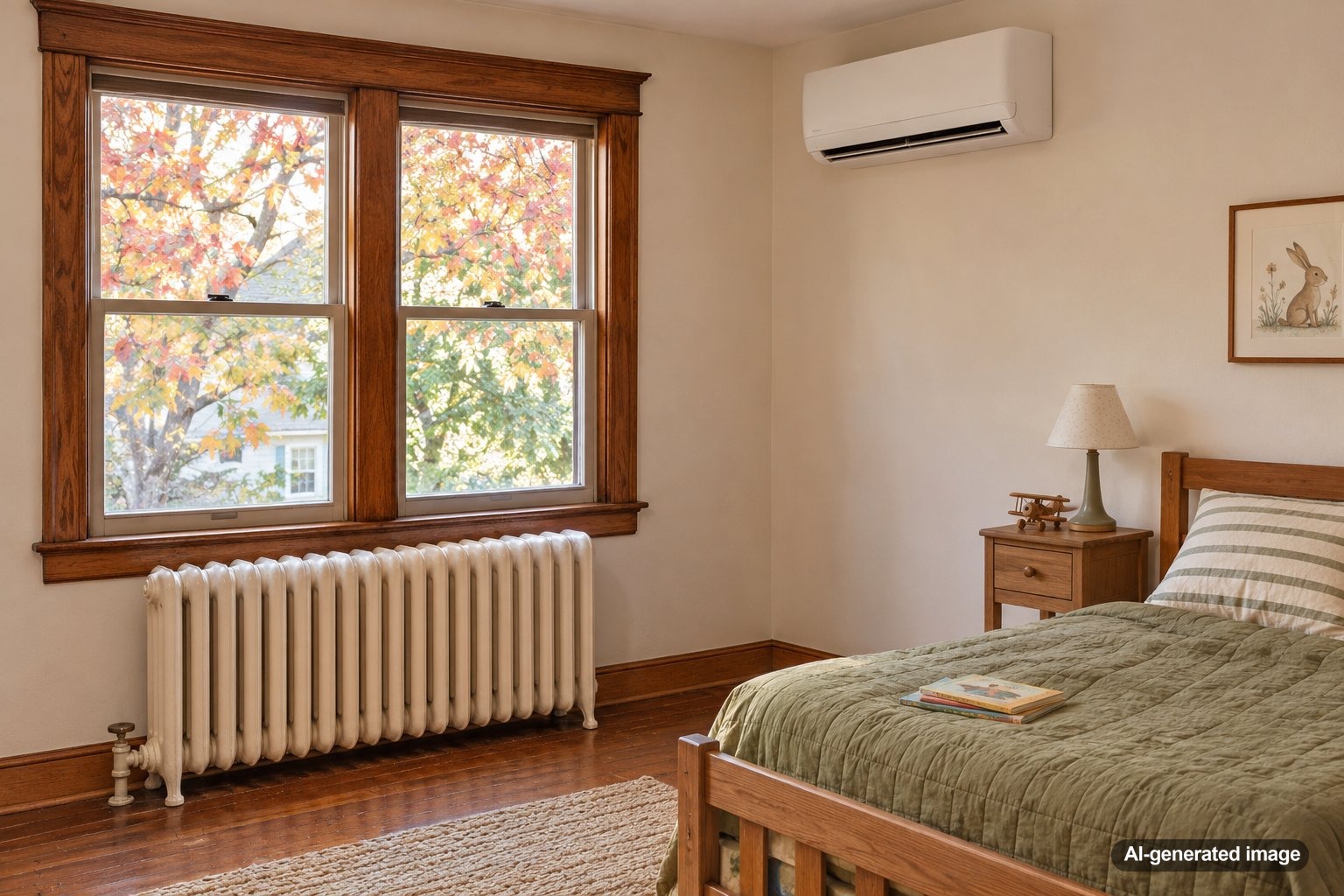
Can you install a heat pump in a home with cast-iron radiators? Yes, but the right approach depends on whether your radiators use hot water or steam, how much heat your home needs, and whether you want to keep the existing radiators. Many older homes throughout Central and Northern New Jersey have beautiful cast-iron radiators that still provide dependable warmth. Replacing the boiler doesn’t necessarily mean replacing those radiators, but connecting them to a heat pump requires careful planning.
The biggest question isn’t whether a heat pump can heat an older house. It’s whether the type of heat pump you choose can work effectively with the heating distribution system already installed. Before making that decision, it helps to understand the differences between traditional boilers, hydronic heat pumps, and ductless mini split heating and cooling systems.
A heat pump can be a practical option for a home with cast-iron radiators, but there are several possible installation approaches.
- Hot-water radiators may work with a properly designed air-to-water heat pump system.
- Steam radiators cannot be connected directly to a conventional air-to-water heat pump without significant system modifications.
- Some homes need additional radiator capacity or insulation improvements to operate effectively at lower water temperatures.
- Ductless heat pumps can provide heating and cooling without using the existing radiators.
- A hybrid approach may allow homeowners to retain their existing boiler while adding heat pump heating.
Why Cast-Iron Radiators Make Heat Pump Installations Different
Traditional cast-iron radiator systems were commonly designed around a boiler that produces very hot water or steam. The radiators transfer that heat into the rooms, and their substantial metal mass allows them to remain warm after the boiler stops firing.
Heat pumps operate differently. Instead of generating heat through combustion, they transfer heat from one location to another. An air-to-water heat pump extracts heat from outdoor air and transfers it into water circulating through a compatible heating system.
The challenge is water temperature. Older hot-water radiator systems may have been designed for supply temperatures near 180 degrees Fahrenheit, while many air-to-water heat pumps operate more efficiently at substantially lower temperatures. Some modern equipment can produce higher water temperatures, but its available heating capacity and efficiency depend on operating conditions.
When cooler water circulates through an existing cast-iron radiator, the radiator releases less heat into the room. A radiator that performs perfectly with a conventional boiler might not deliver enough warmth with lower-temperature water during a New Jersey cold snap.
That doesn’t automatically disqualify the radiator. Many older radiators were generously sized, and improvements to insulation, windows, and air sealing may have reduced the home’s heating requirements since the original system was installed.
First, Determine Whether Your Radiators Use Steam or Hot Water
Two homes can have nearly identical-looking cast-iron radiators but completely different heating systems. Identifying the existing system is one of the most important steps in planning an upgrade.
Hot-Water Radiator Systems
Hydronic radiator systems circulate heated water through pipes and radiators before returning it to the boiler. Depending on the radiator sizes, piping arrangement, circulation requirements, and building heat loss, an air-to-water heat pump may be capable of using some or all of the existing distribution system.
A qualified HVAC professional needs to evaluate whether the radiators can deliver enough heat at the proposed operating temperatures. The existing piping, pumps, expansion tank, and controls also need to be assessed for compatibility.
Steam Radiator Systems
Steam systems operate on a different principle. The boiler produces steam that travels through piping and condenses inside the radiators, releasing heat. Conventional air-to-water heat pumps do not produce steam for these legacy distribution systems.
Converting a steam system to hot-water heating may require substantial piping changes and radiator compatibility checks. Not every steam radiator or piping arrangement is suitable for conversion. For many homeowners, adding an independent heat pump system is more practical than attempting to reuse the steam distribution network.
Three Ways to Add a Heat Pump to an Older Radiator Home
1. Install an Air-to-Water Heat Pump
An air-to-water heat pump is the most direct option when the goal is to preserve a compatible hot-water radiator system. The equipment heats circulating water rather than delivering warm air through ducts or indoor wall units.
Successful installations require more than replacing the boiler with outdoor equipment. An HVAC professional must calculate the heating demand of individual rooms, evaluate radiator output at lower water temperatures, and design appropriate water circulation and controls.
Some systems also need a buffer tank, modified piping, or supplemental heating capacity. These components should be selected according to the equipment and the home’s actual heating requirements rather than assumed necessary for every installation.
2. Add Ductless Mini Split Heat Pumps
Ductless heat pumps offer another approach, particularly when a home has steam radiators or when changing the existing hydronic system would be complicated.
Indoor air-handling units distribute heated or cooled air directly into living spaces. Because they operate independently of the radiators, homeowners don’t need to convert the radiator piping to install this type of equipment.
For example, an older Union County home with a steam boiler might add ductless units to frequently occupied bedrooms and living areas. The heat pumps could provide everyday heating and summer cooling while the boiler remains available for other rooms or colder conditions.
The installation still requires thoughtful indoor-unit placement, appropriate capacity, and electrical evaluation. Closed-off rooms and complicated floor plans may need additional units or another distribution solution.
3. Keep the Boiler and Use a Hybrid Heating Strategy
Removing the original heating system isn’t always necessary. A homeowner may choose to retain a functional boiler while installing heat pumps to serve part or most of the home’s heating needs.
This can be especially appealing when the radiators work well, the boiler has useful service life remaining, and the homeowner wants heating and cooling flexibility.
Controls and operating procedures matter. The two heating systems should be coordinated to avoid unnecessary simultaneous operation and to provide comfortable temperatures during colder weather.
How to Know Whether Existing Radiators Are Large Enough
A cast-iron radiator’s physical size is important, but appearance alone can’t establish whether it will work with a heat pump. A professional assessment should compare each room’s calculated heating load with the radiator’s expected output at the proposed supply-water temperature.
Consider a large radiator beneath the window of an older living room. It may have been installed when the home had minimal insulation and drafty windows. If the home now has improved air sealing and insulation, that same radiator may be capable of maintaining comfortable temperatures with cooler water.
Conversely, a small radiator in a poorly insulated upstairs bedroom might struggle to provide sufficient heat even when the rest of the house performs well.
The evaluation should account for:
- Room-by-room heat loss: How much heating each room requires during expected winter design conditions.
- Radiator dimensions and construction: The size, number of sections, and estimated output of each heat emitter.
- Water temperatures: The supply and return temperatures needed to meet heating demand.
- Existing piping: Whether circulation and distribution can support the proposed equipment.
- Building improvements: How insulation, air sealing, and window upgrades affect heating requirements.
- Cold-weather capacity: Whether the selected heat pump can meet the load as outdoor temperatures drop.
If some radiators are undersized, the solution doesn’t necessarily require replacing every unit. Additional heat emitters, selected radiator upgrades, or improvements to the building envelope may make the overall design more practical.
Will a Heat Pump Keep an Older New Jersey Home Warm in Winter?
Modern cold-climate heat pumps can provide effective heating in low outdoor temperatures when properly selected and installed. However, the actual performance of any specific system depends on the equipment’s operating range, heating capacity, and distribution method.
For a radiator-based installation, the challenge involves both outdoor conditions and required water temperature. As the weather gets colder, the home generally needs more heat. At the same time, an air-source heat pump’s available capacity and efficiency may decrease, particularly when it must produce hotter water.
That makes equipment selection and heat-loss calculations particularly important in Central and Northern New Jersey, where winter temperatures can expose weaknesses in an undersized heating system.
A qualified contractor can evaluate whether the heat pump can carry the full heating load or whether supplemental heating is appropriate. The answer should come from a system design, not simply the advertised heating capacity of an outdoor unit.
Can You Get Air Conditioning Through Cast-Iron Radiators?
Not with conventional cast-iron radiators. Although some air-to-water heat pumps can produce chilled water, ordinary radiators are not designed to provide practical whole-home cooling.
Circulating chilled water through them can create condensation when the radiator surfaces fall below the indoor air’s dew point. That moisture can damage flooring, walls, and nearby finishes.
Cooling with an air-to-water heat pump requires suitable equipment designed for chilled-water operation, such as appropriately controlled fan-coil units with condensate management.
Homeowners who want both heating and cooling may find ductless or ducted air-to-air heat pumps more straightforward, especially when preserving their existing radiator heating system.
What Should Homeowners Check Before Requesting an Estimate?
- Determine whether your existing boiler serves a steam or hot-water system using its documentation or a previous service report.
- Note rooms that are consistently colder than others during winter.
- Gather information about recent insulation, window, or air-sealing improvements.
- Identify whether you want heating only or both heating and air conditioning.
- Consider whether preserving the appearance and operation of your existing radiators is a priority.
- Locate previous heating bills and equipment records to discuss with your contractor.
These details provide useful background for an HVAC consultation. Homeowners should not attempt to modify radiator piping, drain an operating steam system, or alter boiler controls to test heat pump compatibility.
When to Consult an HVAC Professional
A heat pump retrofit in a radiator-heated house is a system-design project, not simply an equipment swap. Professional guidance becomes especially important when the home has steam heating, multiple heating zones, older piping, uncertain insulation performance, or uneven room temperatures.
A contractor should assess the building’s heating load and compare the available equipment options before recommending a replacement. Homeowners considering a major heating upgrade can explore Meyer & Depew’s heating installation and replacement services to start that conversation.
It is also worth discussing the overall project scope. An air-to-water conversion may involve distribution changes, while ductless installations require appropriate indoor-unit locations and electrical infrastructure. The most sensible approach depends on the building, comfort goals, and installation requirements.
Frequently Asked Questions
Do I Have to Remove My Cast-Iron Radiators to Install a Heat Pump?
No. You may be able to retain them as part of a compatible hot-water system or leave them in place while installing an independent ductless heat pump system. Their condition and compatibility determine whether they can remain operational.
Are Cast-Iron Radiators Efficient With a Heat Pump?
They can work effectively when their output is sufficient at lower water temperatures. However, the heat pump’s overall efficiency depends on the temperatures it must produce, the equipment selected, outdoor conditions, and system design.
Can a Heat Pump Replace an Oil or Gas Boiler?
Yes, in some homes. An air-to-water heat pump may replace a boiler serving compatible hot-water radiators, provided the complete system is properly evaluated and adapted. Steam systems present additional complications, and an independent air-to-air heat pump may be a better option.
Will My Radiators Feel as Hot With a Heat Pump?
Not necessarily. Heat pump systems often circulate cooler water than traditional boilers. Radiators may feel warm rather than extremely hot and operate for longer periods. Comfort depends on delivering enough total heat to the rooms, not matching the surface temperature of the old radiators.
Should I Improve My Insulation Before Installing a Heat Pump?
It is worth evaluating. Better insulation and air sealing can lower the heating demand, potentially allowing existing radiators to work at lower water temperatures. A professional heat-loss assessment can help determine which improvements would be most useful.
The Bottom Line for Homes With Cast-Iron Radiators
Cast-iron radiators do not automatically prevent a home from using heat pump technology. A compatible hot-water radiator system may be suitable for an air-to-water heat pump, while ductless heating or a hybrid approach may be more practical for steam-heated homes. The right decision comes down to radiator capacity, building heat loss, cold-weather performance, and the homeowner’s priorities.
For homeowners in Central and Northern New Jersey, the best starting point is a professional assessment of the existing heating system. Understanding what can be retained, what needs modification, and how different heat pump technologies would perform helps avoid unnecessary upgrades and supports a more informed investment.
Thinking about replacing or upgrading your HVAC system?
Meyer & Depew can help you understand your options for comfort, efficiency, and long-term reliability in your New Jersey home or business.
Questions? Contact Meyer & Depew or call 908.272.2100.