

Why Poor Airflow Makes AC More Expensive to Run
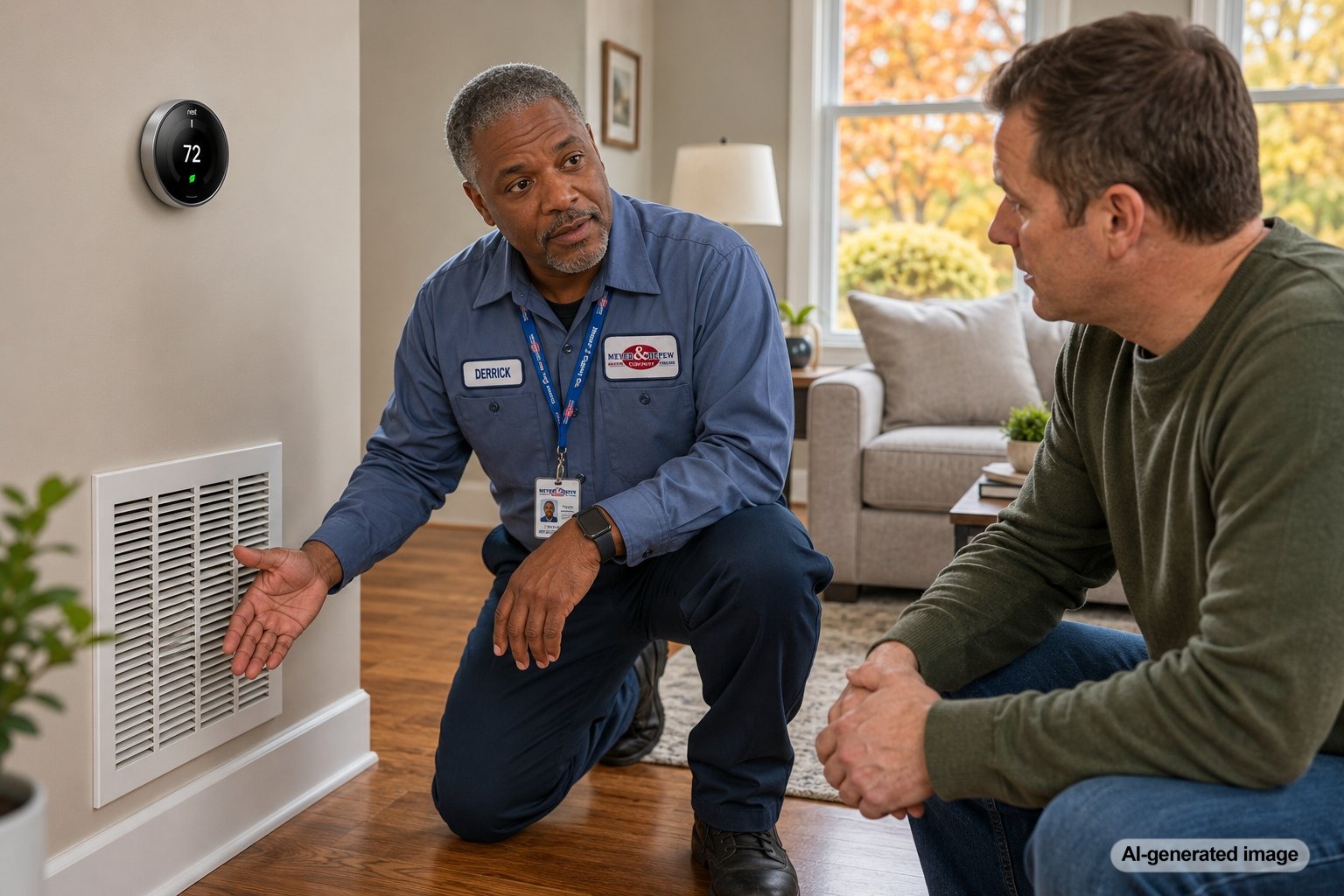
Poor airflow makes AC more expensive to run because your system has to work harder and longer to move enough conditioned air through your home or building. When air cannot circulate properly, the equipment may keep running even though rooms still feel warm, humid, or uneven. That extra runtime can increase energy use, add wear to key components, and make comfort problems more noticeable during New Jersey’s hot, humid weather.
Airflow issues are also easy to overlook because the AC may still turn on. The problem is not always a total breakdown. It may be a clogged filter, blocked return, dirty coil, duct restriction, blower issue, or another condition that prevents the system from moving air the way it should. If your AC is struggling to keep up, Meyer & Depew’s AC service and maintenance team can evaluate the system and help identify the cause.
Poor airflow can raise AC operating costs by making the system run longer, reducing heat transfer, increasing humidity problems, and forcing parts such as the blower motor and compressor to work under more strain.
How Airflow Affects AC Efficiency
Your AC does more than blow cold air. It pulls warm indoor air through return ducts, moves that air across the evaporator coil, removes heat and moisture, and sends cooled air back through the supply vents. When that air movement is restricted, the cooling process becomes less efficient.
Think of airflow as the delivery system for comfort. Even if the equipment is capable of cooling, the home or building will not benefit fully if cooled air cannot reach the rooms that need it. A system with weak airflow may run for longer cycles, short cycle, leave certain rooms uncomfortable, or struggle to remove humidity from the air.
Why Poor Airflow Can Increase Energy Use
When airflow drops, the thermostat may take longer to reach the set temperature. The AC keeps running because the space has not cooled enough, even though the equipment is already working hard. Longer runtime often means more electricity use.
Restricted airflow can also reduce heat transfer across the indoor coil. If too little warm air passes over the coil, the system cannot absorb heat as effectively. In some cases, the coil may become too cold and begin to freeze. A frozen coil can make cooling even weaker and may lead to a service call if the issue continues.
Another concern is mechanical strain. A blower motor may have to work harder to move air through a dirty filter, blocked return, or duct problem. The outdoor unit and compressor may also be affected when the system runs longer than normal. This does not mean one airflow problem will automatically ruin an AC system, but it can increase stress and make existing weaknesses more noticeable.
Common Airflow Problems That Make AC Work Harder
Some airflow problems are simple, while others require professional testing. A qualified technician can check static pressure, duct conditions, blower operation, coil condition, refrigerant-related concerns, and other factors that are not safe or practical for most homeowners to evaluate on their own.
- Dirty or restrictive air filter: A clogged filter can limit return airflow and make the system work harder to pull air through.
- Blocked supply or return vents: Furniture, rugs, curtains, or storage items can interrupt circulation and create uneven temperatures.
- Dirty indoor coil: Dust buildup on the evaporator coil can interfere with heat transfer and reduce cooling performance.
- Duct leakage or duct restrictions: Leaky, crushed, undersized, or poorly balanced ducts can keep cooled air from reaching the right spaces.
- Blower issues: A worn motor, dirty blower wheel, or incorrect blower setting can reduce the volume of air moving through the system.
- Closed dampers or zoning concerns: In homes with zoning systems, damper or control issues can affect airflow to certain areas.
Why Humidity Makes Poor Airflow Feel Worse
In Central and Northern New Jersey, summer comfort is not only about temperature. Humidity plays a major role. When airflow is weak, the AC may have a harder time removing moisture from the air. Rooms can feel sticky even when the thermostat reading looks close to normal.
High indoor humidity can make homeowners lower the thermostat to feel more comfortable. That can increase runtime and energy use without solving the underlying airflow issue. In some homes, airflow problems can also show up as cool areas near the equipment and warmer rooms farther away from the air handler.
Safe Checks Before You Call
- Check the thermostat settings and make sure the system is set to cooling.
- Inspect the air filter and replace it if it is dirty or past its recommended change interval.
- Make sure supply and return vents are open and not blocked by furniture, rugs, curtains, or storage.
- Look for obvious debris around the outdoor unit and keep the area around it clear.
- If the system has stopped running, check whether the breaker has tripped once, if it is safe to do so. If it trips again, schedule professional service.
Avoid opening sealed equipment, handling refrigerant lines, bypassing safety switches, or making electrical repairs. Those tasks should be handled by a qualified professional because they can involve shock, fire, equipment damage, or refrigerant exposure risks.
When Poor Airflow Points To A Bigger AC Issue
Weak airflow should not be ignored if it continues after basic checks. Warm air from vents, ice on refrigerant lines, repeated short cycling, unusual noises, burning smells, water around the indoor unit, or rooms that never cool evenly can all be signs that the system needs professional attention.
Older systems may also have airflow problems tied to design limitations, aging ductwork, or equipment that no longer matches the needs of the home. In those cases, service may uncover whether repair, duct improvements, maintenance, or replacement should be considered. For homeowners comparing long-term options, Meyer & Depew also provides AC installation and replacement guidance.
How Maintenance Helps Protect Airflow
Routine maintenance can help catch airflow restrictions before they become larger comfort or efficiency problems. During a professional AC maintenance visit, a technician can inspect system operation, look for dirt buildup, check electrical components, evaluate performance, and identify conditions that may be limiting airflow.
Maintenance cannot prevent every breakdown or guarantee lower energy bills, but it can reduce the risk of avoidable problems and help the system operate closer to its intended performance. This is especially useful before peak cooling season, when a small restriction can become much more noticeable during long stretches of hot weather.
FAQ About Poor AC Airflow
Can a dirty air filter really make AC more expensive to run?
Yes, it can. A dirty filter can restrict return airflow, which may make the system run longer and work harder to cool the home. Replacing the filter is one of the safest and simplest checks a homeowner can make.
Why are some rooms cooler than others?
Uneven cooling may be caused by blocked vents, duct leakage, duct design issues, insulation differences, sun exposure, zoning problems, or an AC system that needs service. A technician can help determine whether the issue is airflow, equipment performance, or a building-related factor.
Can poor airflow damage my AC?
Poor airflow can increase strain on the system and may contribute to problems such as frozen coils, longer runtime, or added component wear. It does not always mean major damage has occurred, but it is worth addressing before the problem becomes more expensive.
Should I close vents in unused rooms to save energy?
Closing several vents can create pressure problems in some duct systems and may reduce efficiency instead of improving it. It is better to ask a professional about proper airflow balance, zoning options, or duct improvements.
When should I schedule service for weak AC airflow?
Schedule service if airflow stays weak after replacing the filter and checking for blocked vents, or if you notice ice, unusual noises, water around the unit, warm air, repeated short cycling, or persistent uneven cooling.
Poor airflow can quietly turn a working AC system into an expensive, uncomfortable one. Fixing the cause can help improve comfort, reduce unnecessary strain, and make it easier for your system to keep up during New Jersey cooling season.
Need help with your heating, cooling, or HVAC system?
Meyer & Depew serves homeowners and businesses throughout Central and Northern New Jersey.
Get a quote or call 908.272.2100.