



How Staircases Affect Cooling in Two-Story Homes
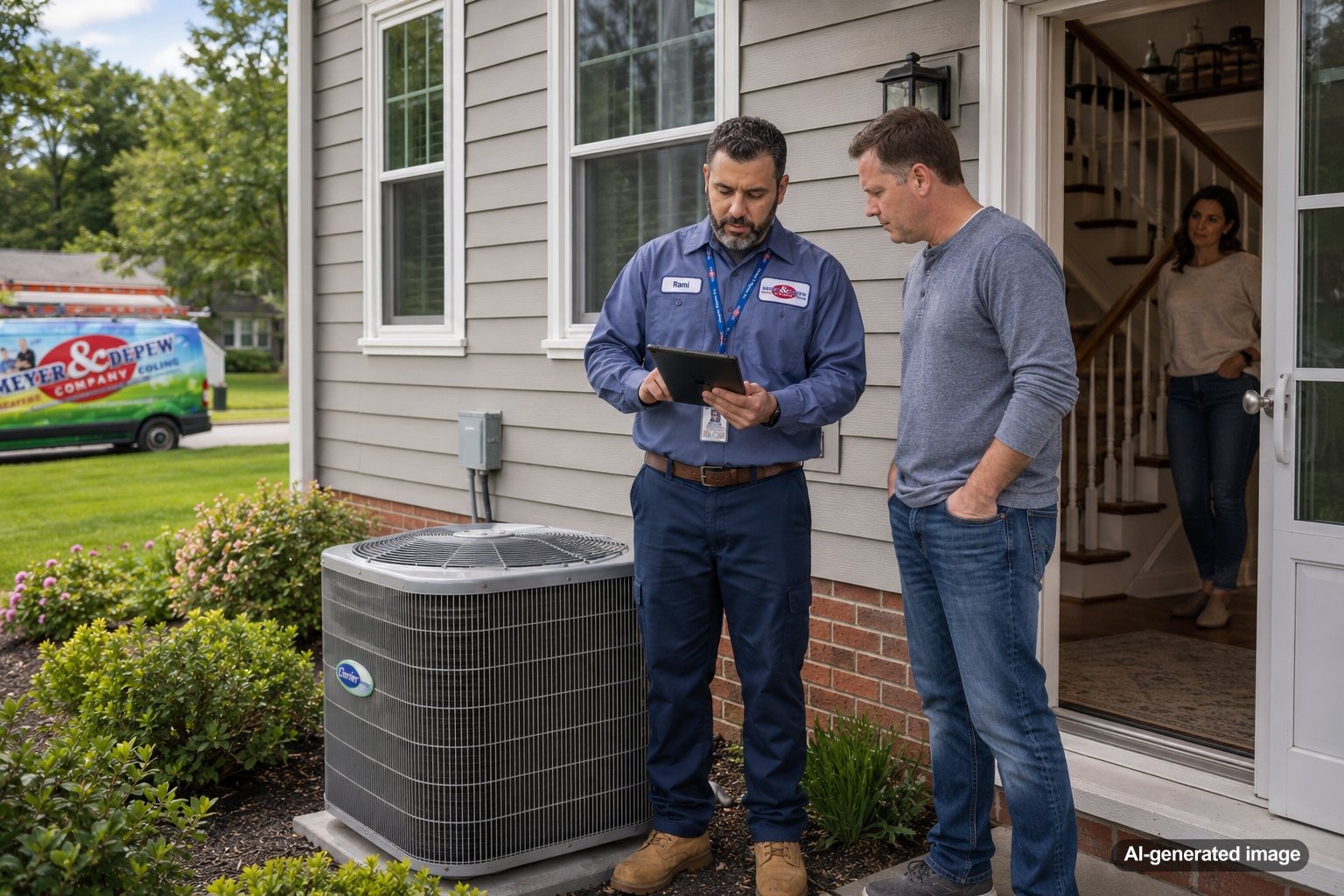
Staircases affect cooling in two-story homes because they create an open path for warm air, cool air, pressure differences, and humidity to move between levels. In many New Jersey homes, especially older colonials, split-levels, townhomes, and homes with open foyers, the upstairs can feel warmer even when the AC is running normally. The staircase is not usually the only reason, but it often makes uneven cooling more noticeable.
When a two-story home has one central AC system serving both floors, airflow balance matters. Warm air naturally rises, sunlight heats upper rooms, attic heat presses down from above, and the staircase can let conditioned air drift away from where you want it. If your upstairs rooms are uncomfortable, professional AC service and maintenance can help identify whether the issue is airflow, equipment performance, duct design, thermostat placement, insulation, or a combination of factors.
Staircases can make upstairs cooling problems worse by allowing warm air to rise and cool air to settle or escape. Open stairwells, high ceilings, leaky ducts, poorly placed thermostats, closed doors, and limited return airflow can all contribute to uneven temperatures between the first and second floors.
Why Staircases Change The Way Cool Air Moves
Air inside a home is always moving, even when you do not feel a strong draft. During summer, warmer air tends to collect higher in the house, while denser cooler air can settle lower. A staircase gives that air a direct route between floors. In a closed-off floor plan, rooms may hold temperatures more separately. In an open stair design, the upstairs and downstairs are more connected, which can make temperature differences more obvious.
The effect is stronger in homes with tall entryways, open railings, loft-style landings, or staircases near the thermostat. If the thermostat is downstairs, it may be satisfied while upstairs bedrooms are still warm. The AC shuts off because the downstairs reached the set temperature, but the second floor still needs more cooling.
Common Staircase-Related Cooling Problems
A staircase can expose several comfort issues that might otherwise be less noticeable. It does not mean the stairs are the problem by themselves. It means the stairwell is part of the home’s air movement pattern.
- Warm upstairs rooms: Heat rises, and second-floor rooms also gain heat from the roof, attic, windows, and sun exposure.
- Cool downstairs, hot upstairs: A downstairs thermostat may shut the system off before the upper level is comfortable.
- Drafts near the stairwell: Pressure differences can pull air across open spaces, especially when doors are closed upstairs.
- Humidity that feels worse upstairs: If the AC runs in short cycles or airflow is unbalanced, moisture removal may not feel even throughout the home.
- Temperature swings after sunset: Upper floors can hold stored heat from the attic and roof even after outdoor temperatures begin to drop.
How Thermostat Placement Can Make The Issue Worse
Thermostat location is a major factor in two-story comfort. A thermostat placed near a staircase, sunny wall, supply vent, return grille, kitchen, or exterior door may not read the temperature that matters most. In many homes, the thermostat is on the first floor, which can make the AC respond mainly to downstairs conditions.
Smart thermostats and remote sensors may help some homes better understand temperature differences between floors. They do not fix duct problems or undersized equipment, but they can provide a clearer picture of where comfort is drifting. For homes with persistent uneven temperatures, thermostat options may be worth discussing as part of a broader HVAC evaluation.
Airflow, Return Vents, And Closed Doors
Cooling a two-story home is not only about sending cold air into rooms. The system also needs a way to pull air back through return vents. When upstairs bedrooms have closed doors and limited return pathways, air can become trapped. That can reduce circulation, create pressure imbalances, and make the staircase act like a main air transfer path.
Some homes have too few return vents upstairs, undersized ducts, or supply registers that do not deliver enough airflow to second-floor rooms. Others have furniture blocking vents, dirty filters restricting airflow, or dampers that were never properly balanced. These are common issues a qualified HVAC technician can evaluate without guessing at one single cause.
- Make sure supply and return vents are open and not blocked by furniture, rugs, curtains, or storage.
- Inspect or replace the air filter if it is dirty or overdue.
- Check whether bedroom doors are making rooms feel stuffy when closed for long periods.
- Look for obvious debris around the outdoor AC unit.
- Confirm that thermostat settings are appropriate and that the system is set to cooling mode.
Why New Jersey Homes Often Notice This In Summer
New Jersey summers can bring heat, humidity, and long stretches where AC systems run heavily. In two-story homes, that combination can reveal weak airflow, aging equipment, leaky ductwork, attic heat gain, or poor zoning more quickly. A home may feel fine during mild spring weather, then struggle when upstairs bedrooms are exposed to afternoon sun and attic heat.
Older homes can be especially challenging because additions, finished attics, converted spaces, and past renovations may have changed the original airflow design. A staircase that once served a smaller floor plan may now connect to expanded living space, larger bedrooms, or a finished upper level that needs more careful temperature control.
When Zoning Or Ductless Cooling May Help
If the upstairs and downstairs have very different cooling needs, a single thermostat may not be enough. A zoning system can divide the home into separate temperature areas, allowing more targeted control when the ductwork and equipment are suitable. In some homes, ductless mini splits can also help with rooms that are difficult to cool through the main duct system, such as additions, bonus rooms, finished attics, or bedrooms far from the air handler.
These options should be evaluated carefully. Adding equipment or controls without understanding duct capacity, load, insulation, and airflow can create new problems. For homes with ongoing upstairs discomfort, zoning systems may be one practical path to review with an experienced HVAC professional.
When To Schedule Professional AC Service
Schedule service if the upstairs remains warm even after basic checks, if the AC runs constantly without improving comfort, if airflow from upstairs vents feels weak, or if humidity remains high indoors. You should also call for help if the system is short cycling, freezing, leaking water, making unusual noises, or producing warm air from the vents.
A technician can check refrigerant-related performance, electrical components, blower operation, duct condition, static pressure, thermostat behavior, and overall system sizing. Homeowners should not open sealed HVAC components, handle refrigerant, bypass safety controls, or attempt electrical repairs. Those are jobs for qualified professionals.
FAQ: Staircases And Two-Story Cooling
Does a staircase always make the upstairs hotter?
No. A staircase does not automatically make a home uncomfortable. The effect depends on floor plan, airflow, thermostat location, duct design, insulation, sun exposure, and how the AC system is set up.
Should I close vents downstairs to force more air upstairs?
Closing too many vents can increase system pressure and may reduce performance. It is better to have airflow professionally evaluated and balanced rather than forcing air through the system in a way it was not designed to handle.
Can a smart thermostat fix uneven cooling?
A smart thermostat or remote sensor may help manage comfort more accurately, but it cannot repair duct restrictions, undersized equipment, poor insulation, or mechanical AC issues. It is one possible tool, not a complete fix.
Is zoning a good option for two-story homes?
Zoning can be helpful when upstairs and downstairs need different temperatures at different times. A qualified HVAC contractor should review the ductwork and equipment first to confirm whether zoning is appropriate.
Why is my upstairs worse at night?
Upper floors can hold heat from the attic, roof, walls, and afternoon sun. If airflow is weak or the thermostat is downstairs, upstairs bedrooms may stay warm after the first floor has already cooled down.
Staircases can make two-story cooling problems easier to feel because they connect the upstairs and downstairs air. The best fix depends on whether the real issue is airflow, thermostat control, duct design, insulation, equipment performance, or the need for better zoning.
Need help with your heating, cooling, or HVAC system?
Meyer & Depew serves homeowners and businesses throughout Central and Northern New Jersey.
Get a quote or call 908.272.2100.